Motivation and Coaching
Help distributors know what to do next, while giving uplines visibility into coaching and recognition opportunities.
When I come into a project, I look for the deeper problem underneath the request: a more foundational issue that, if addressed, can multiply the impact of the work. The goal is not to slow momentum. It is to ask whether there is a higher-leverage use of the team’s time.

I saw this in a Salesforce Advisory project for Shaklee:
Shaklee Connect began as implementation support. Questions about the business and the distributors it served turned it into a broader product, platform, and advisory opportunity.

A third-party implementation of Salesforce struggled with adoption among everyday Shaklee distributors.
Salesforce came in behind that third party and sold Shaklee a different suite of enterprise software, along with advisory services to help recover the account.
My team’s brief was narrow: implement the new licenses, stabilize the account, and move on.
The suite Salesforce had just sold was still built for an enterprise buyer, and Shaklee’s distributors needed simple, mobile support for relationship-based selling before any of it could create value.
The visible problem was a struggling product experience. The deeper problem was fit.

The research pointed somewhere different: distributors ran their businesses in spare moments, from a phone, through personal relationships, and the tool had to fit that before it could add anything.
These seven themes translated what we learned in the field into practical direction for the product, platform, and advisory work.
Help distributors know what to do next, while giving uplines visibility into coaching and recognition opportunities.
Break business goals into timely, manageable actions that fit into short windows of work.
Make it easier to know who needs attention, when to reach out, and why it matters.
Support the right message, channel, and tone for each relationship.
Put product, team, and resource knowledge at distributors’ fingertips.
Deliver timely, accurate data that helps distributors make confident business decisions.
Enable small bursts of productive work from anywhere, often from a phone.
Together, these themes showed that Shaklee needed more than a better interface. They needed Salesforce capability translated into daily distributor behavior, while building the platform and data maturity required for more advanced capabilities later.
Shift the engagement from implementation completion to trusted advisory, helping Shaklee realize value from the right capabilities at the right maturity level.
The product strategy translated enterprise software into an interface shaped around the work distributors do day to day and the outcomes Shaklee was trying to reach. The same platform had to serve people at very different points in their journey as small business owners.

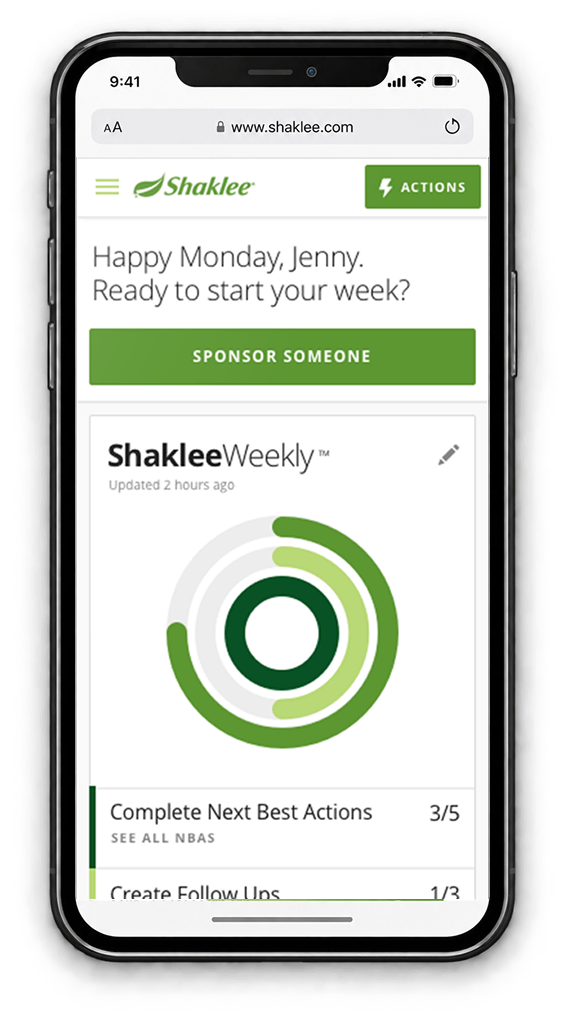
Complete quick tasks in spare moments.
Daily Goals
Small steps every day build strength.
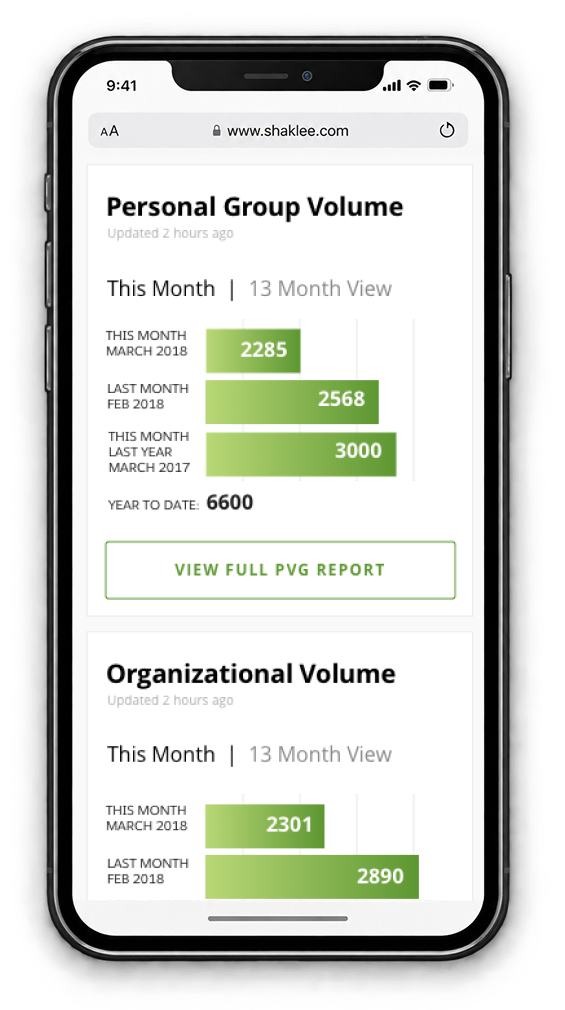
Understand goals, activity, and business health.
Business at a Glance
Where do I need to focus next?
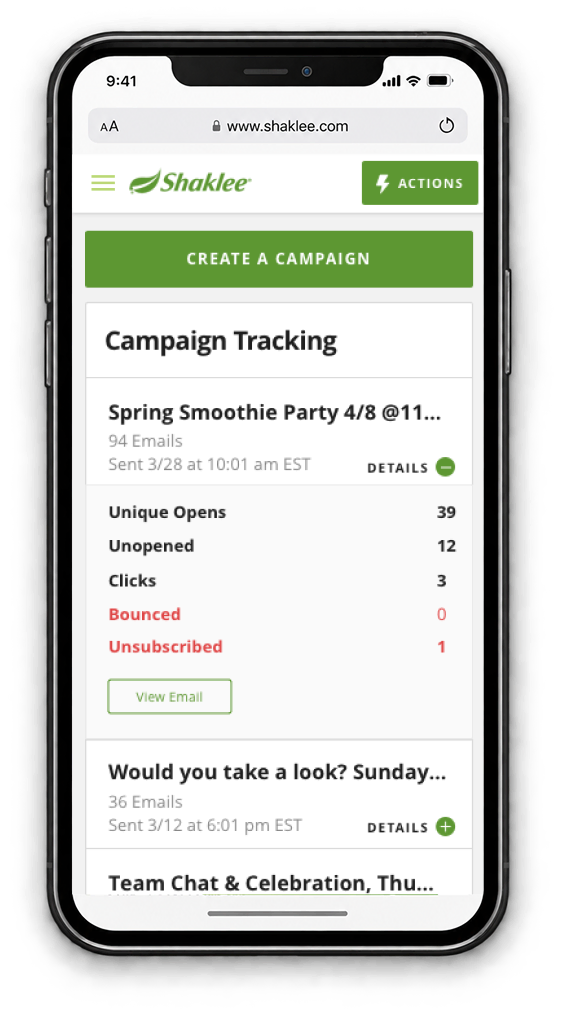
Use more powerful communication, tracking, and reporting tools.
Marketing Campaigns
Personal outreach with enterprise tracking behind it.
Continued advisory relationship through multiple rounds of product design, development, and rollout.
Time in the product and sign-in frequency, three months after launch.
Client satisfaction on a formal survey, on an account that had been at risk.
The Salesforce contract renewed and grew. Salesforce Advisory became a trusted partner, rather than a team brought in to implement licenses and leave.
This work reinforced a practice I have carried into every project since: treat the problem I am handed as a symptom until I have looked for the systemic one underneath it.
Continue Exploring