Executive Summary
Building OpenTable’s Mobile Empire:
From the First iPad App to 70%+ of Reservations
Company
OpenTable
Timeline
Multi-year engagement
Project
Mobile App Design & Development
My Role
Outsourced Design & Development Lead
The Problem
- OpenTable had no in-house expertise to design and build for a brand-new device category when the iPad first launched
- Its broader mobile presence had grown app by app with no single team responsible for consistency
- The existing design system had gone largely unmaintained as new platforms were added
Outcome
- Engaged to build OpenTable’s first iPad app, then given ownership of its entire mobile app portfolio
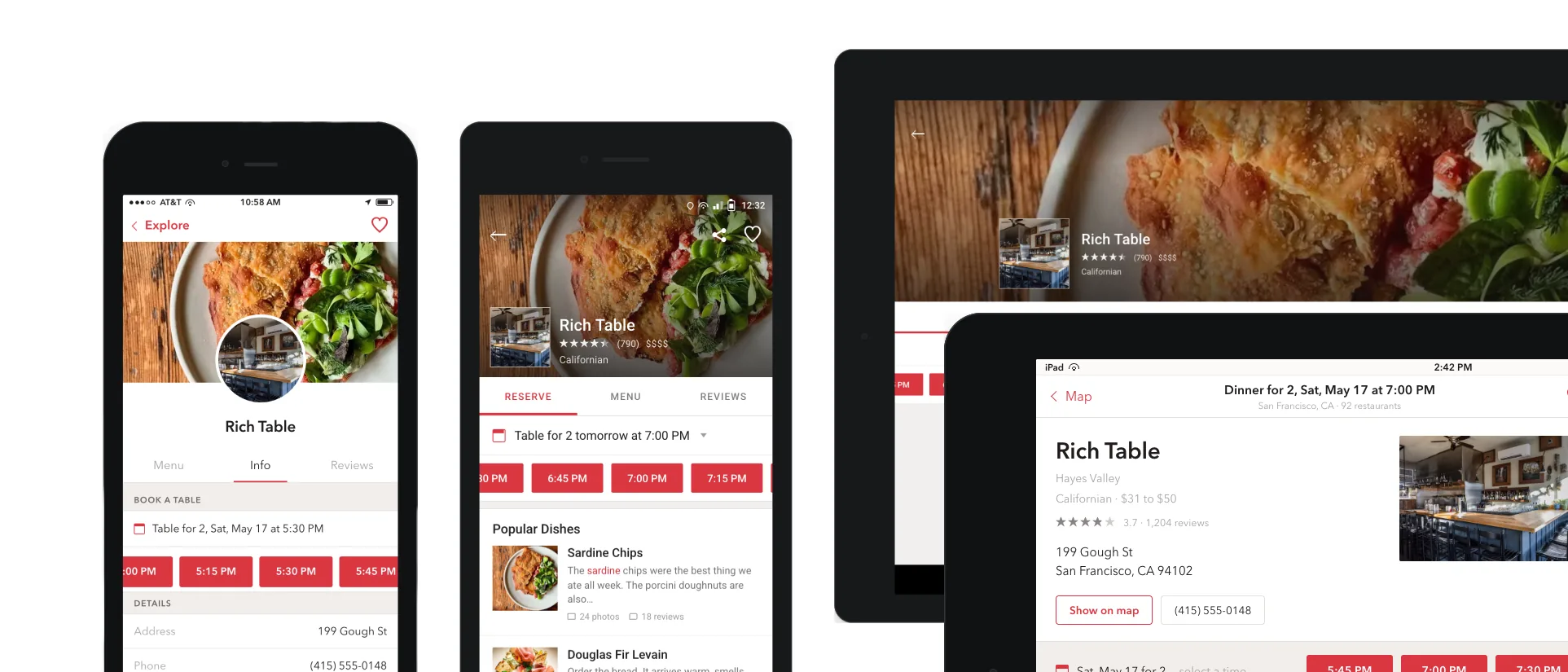
- Used the iOS 7 redesign as the catalyst to consolidate a consistent design system across iPhone, iPad, Android phone, and Android tablet
- Mobile grew to 70%+ of OpenTable’s reservations under our stewardship, prompting OpenTable to bring design and development in-house
My Role
I was the interaction designer on the portfolio and led three visual designers. I also carried the design side of requirements with the development team.
- Outsourced design and development lead for OpenTable’s mobile apps
- Grew the engagement from a single iPad app into ownership of the full mobile portfolio
- Directed the cross-platform design system consolidation around iOS 7
Detailed Case Study
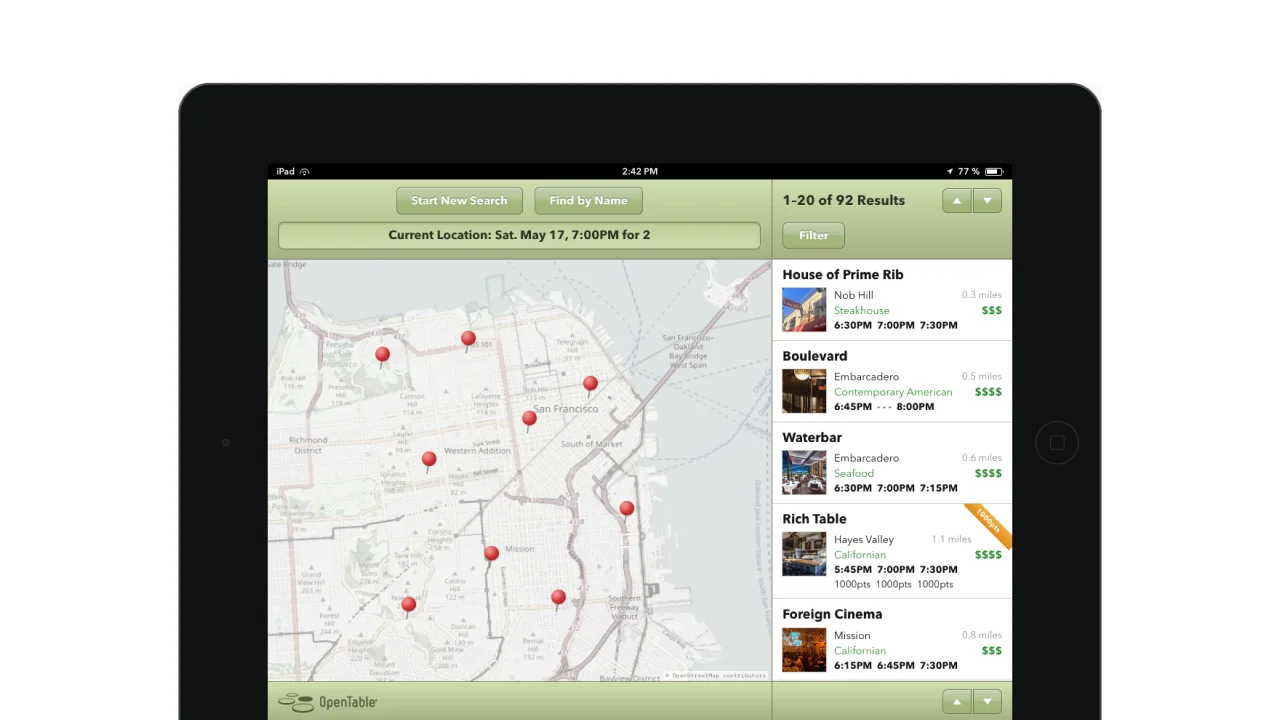
OpenTable’s First iPad App
Landing the First Project
This became our first project with OpenTable, arriving at a moment when the entire industry was still coming to terms with what the iPad’s extra screen space meant for app design. Phone conventions could not simply be scaled up: the format demanded its own thinking.
A Lean-Back Browsing Experience
We opted for a lean-back browsing experience built around how people held and used a tablet, favoring discovery and exploration over the dense, transactional interactions the iPhone app was designed for.
Recognized Immediately
The app was quickly named an Editors’ Choice in the App Store, and held that placement for over a year.

Inherited Mobile Ecosystem
Taking on the Full Portfolio
From there, we took on all of OpenTable’s mobile applications, including their four most popular: iPhone, iPad, Android handset, and Android tablet. We continued to iterate and push app releases across the portfolio for the next two years.
- iPhone
- iPad
- Android handset
- Android tablet
The Portfolio
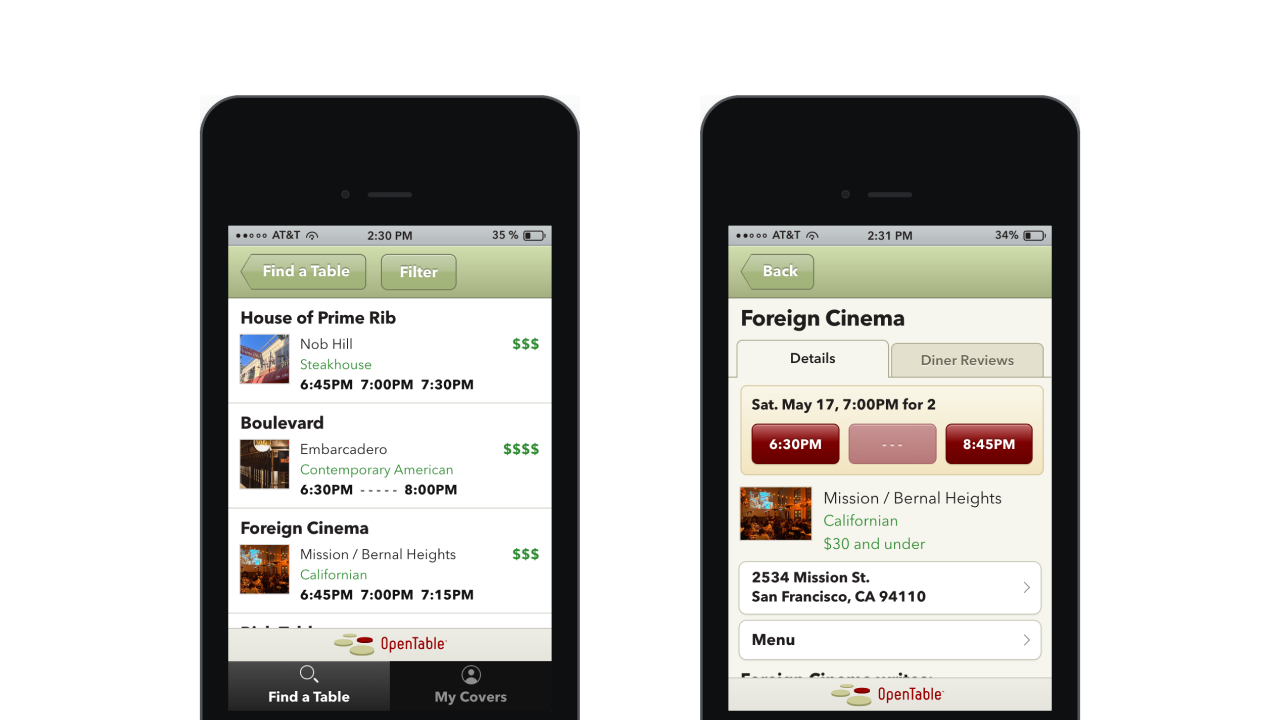
iPhone App
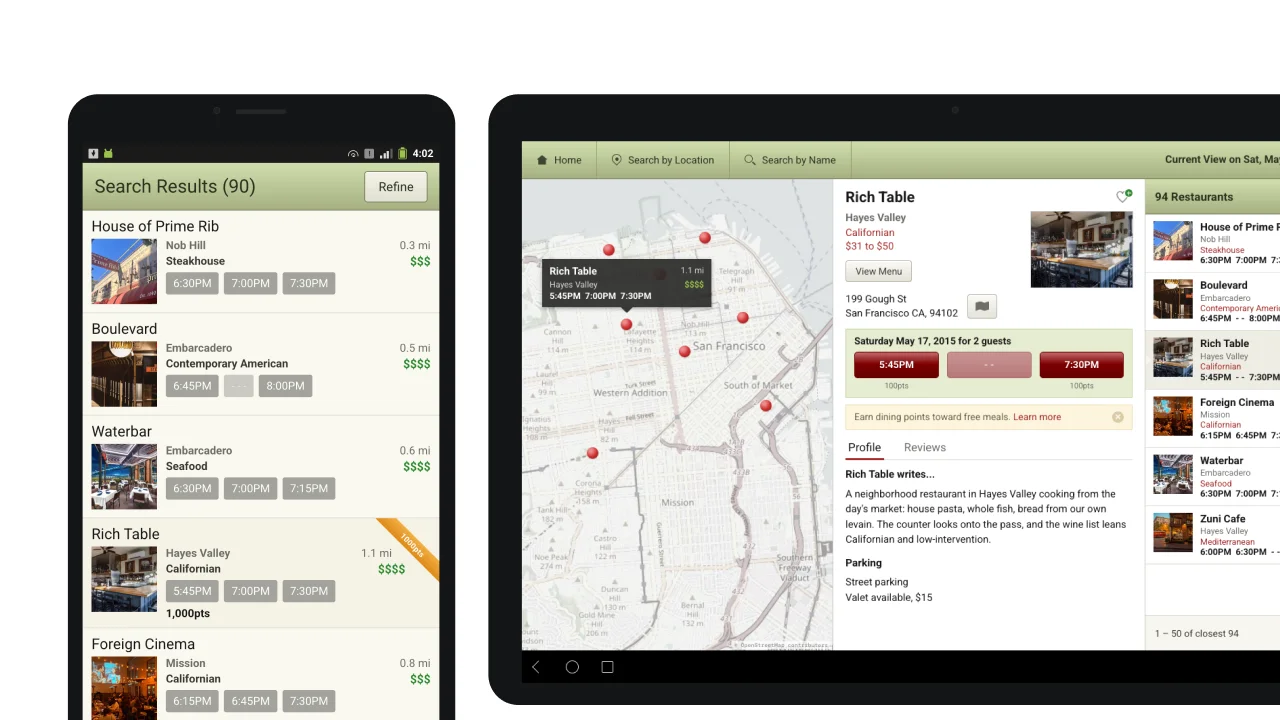
Android Handset and Tablet
Design Language Upgrade
With the release of iOS 7 and the flattening out of skeuomorphism, we saw an opportunity to push for the revision of an outdated design system that, up to that point, OpenTable was reluctant to touch.
Using iOS 7 as a Forcing Function
- Apple’s flat, typographically driven redesign made OpenTable’s aging visual language impossible to ignore
- We used the moment to audit and consolidate a long-neglected design system across all four apps
- Core functions (search, reservation flow, confirmations) were brought into a consistent shared language
- Each platform still respected its own native interaction idioms rather than forcing a single template everywhere
The Redesigned Portfolio

iPhone App: Updated for iOS 7
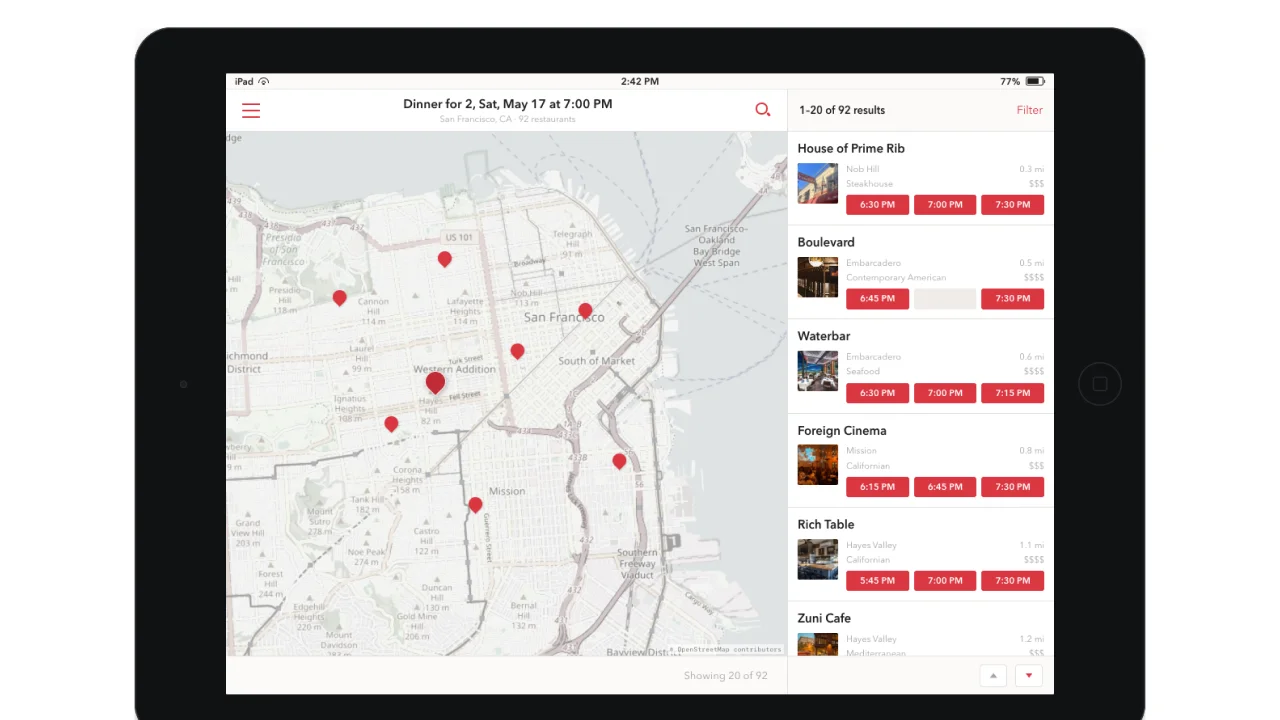
iPad App: Updated for iOS 7
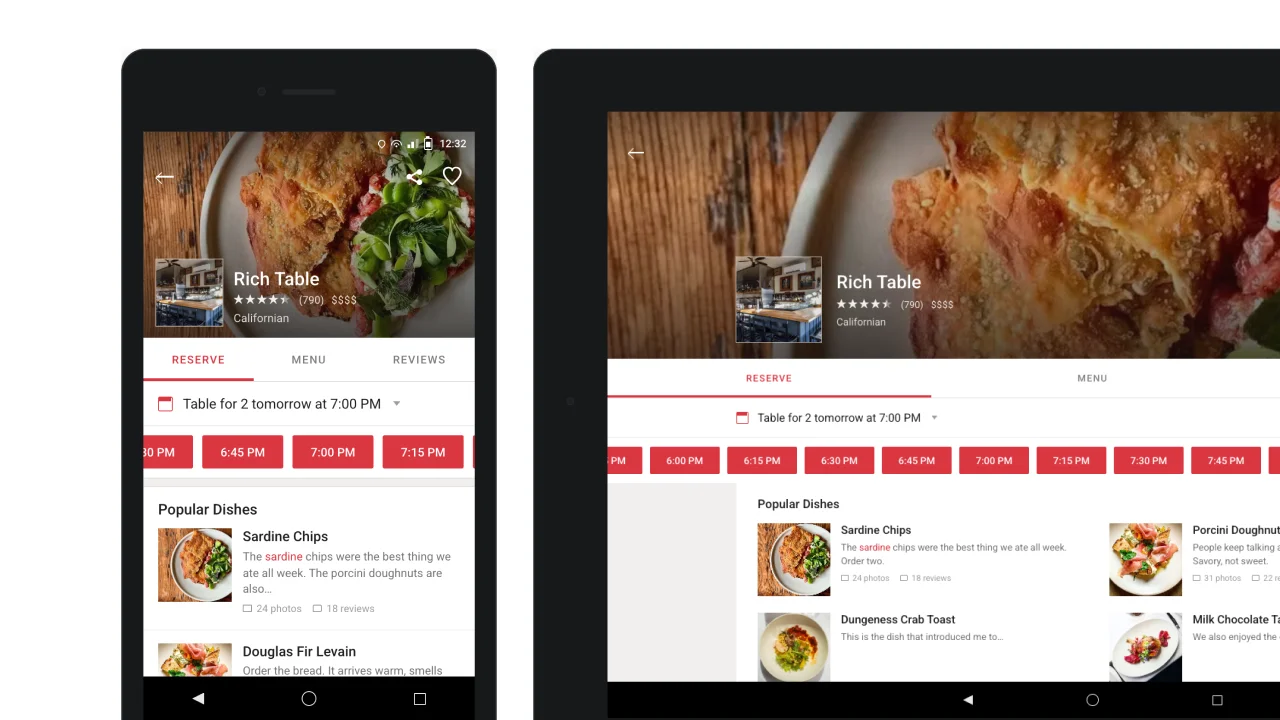
Android Handset App: Updated
Impact & Outcomes
Mobile became so central to how people booked restaurants that OpenTable ultimately chose to bring the design and development effort in-house.
70%+
Of Reservations Made via Mobile
By the time OpenTable brought mobile in-house
Editors’ Choice Award
Across all 4 apps