Executive Summary
A Mobile Companion for PC Gaming: Second-Screen Concepts for Logitech
Company
Logitech
Timeline
3 months
Platform
Mobile companion (iOS/Android) + PC
My Role
Creative Director
The Problem
PC gaming experiences were becoming increasingly complex, but critical information and controls remained fragmented across screens, overlays, and third-party tools. A phone in every gamer’s pocket was an obvious candidate for a second screen, but no one had defined what a mobile companion app should do without becoming another distraction.
Outcome
- Defined and prototyped mobile companion concepts (glanceable stats, social features, and offloaded secondary tasks) that fed into the foundational vision for Logitech G Hub
- Validated the opportunity space with gamers and developers through live prototypes at industry events, including the Game Developers Conference
My Role
I led three UX designers and one motion designer.
- Creative Director leading end-to-end concept development
- Directed experience architecture, product vision, and narrative strategy
- Led research and prototyping efforts, including live validation at the Game Developers Conference
- Facilitated client workshops and internal alignment sessions with Logitech stakeholders
Detailed Case Study
Context and Challenge
Why This Problem Mattered
PC gaming had become social and immersive faster than the tools around it. Players relied on a fragmented mix of overlays, secondary tools, and manual workarounds to manage communication, performance tracking, and game data.
At the same time, Logitech’s role in gaming was largely confined to hardware. While its peripherals were central to gameplay, the company lacked ownership of the broader experience surrounding the player.
What was not working
- Critical gameplay information was buried across multiple interfaces, reducing focus and immersion
- Existing second-screen and companion tools were disconnected from core gameplay workflows
- Logitech’s value stopped at the physical device, with no persistent presence in the software experience
Why existing solutions failed
- Early second-screen efforts lacked integration with real gameplay systems, limiting usefulness
- Third-party tools operated outside the ecosystem, creating fragmented and inconsistent experiences
- No company had established ownership of the mobile-augmented PC gaming experience
Research
Research Approach
- Qualitative research with core gamers
- Heuristic analysis of competitors
- Workshop with Industry Experts
Key Findings
- Immersion drives investment
- Social dynamics matter
- Secondary tasks break flow
Design Implications
- Offload tasks to second screen
- Support glanceable interactions
- Integrate social features
Workshop Outputs
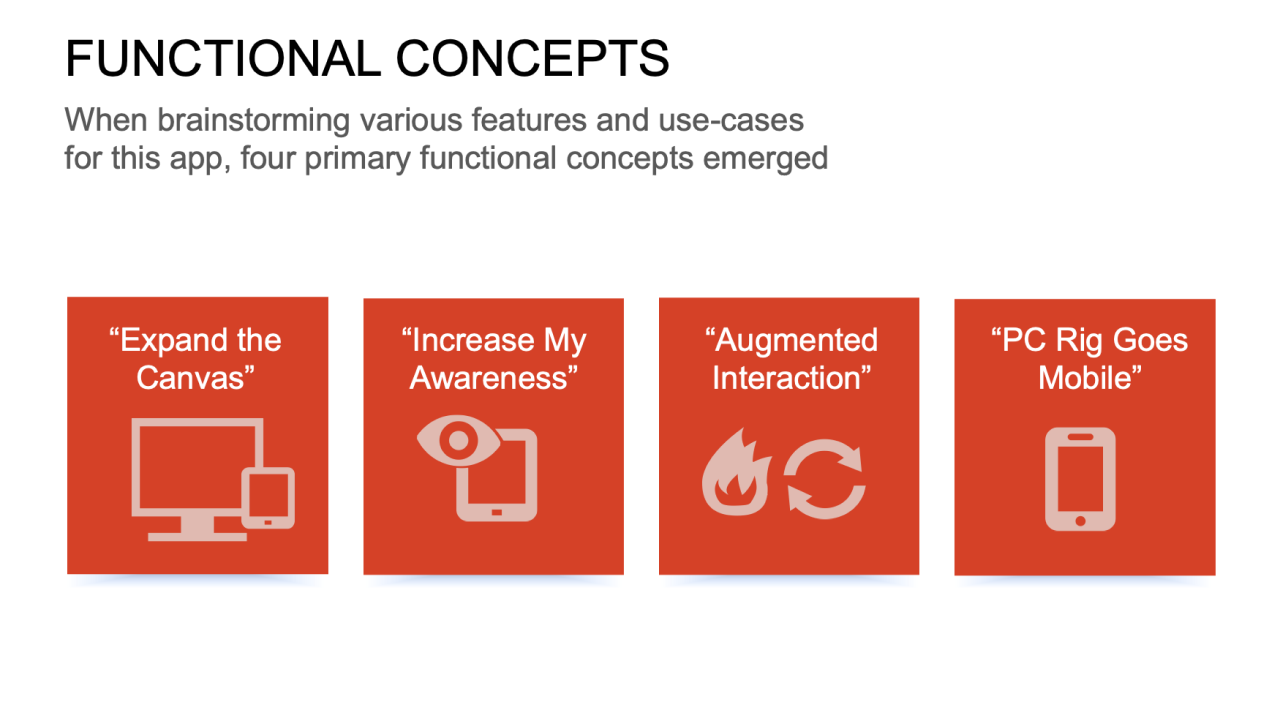
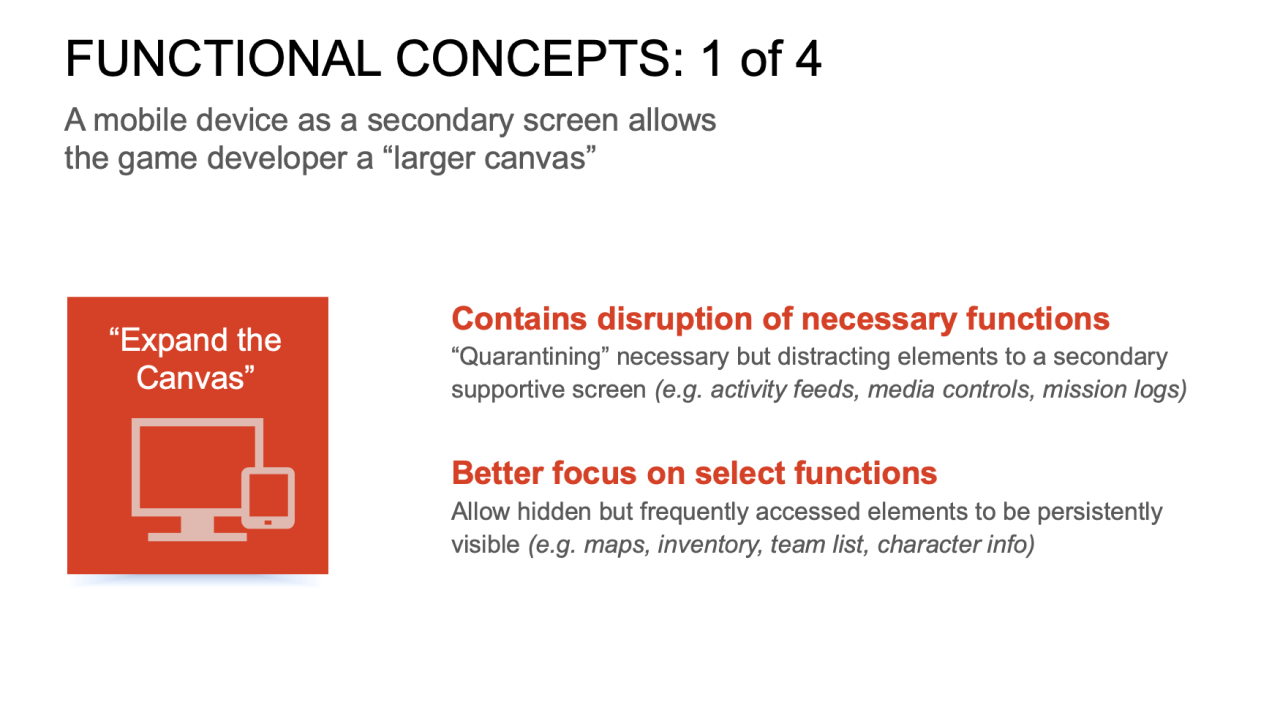
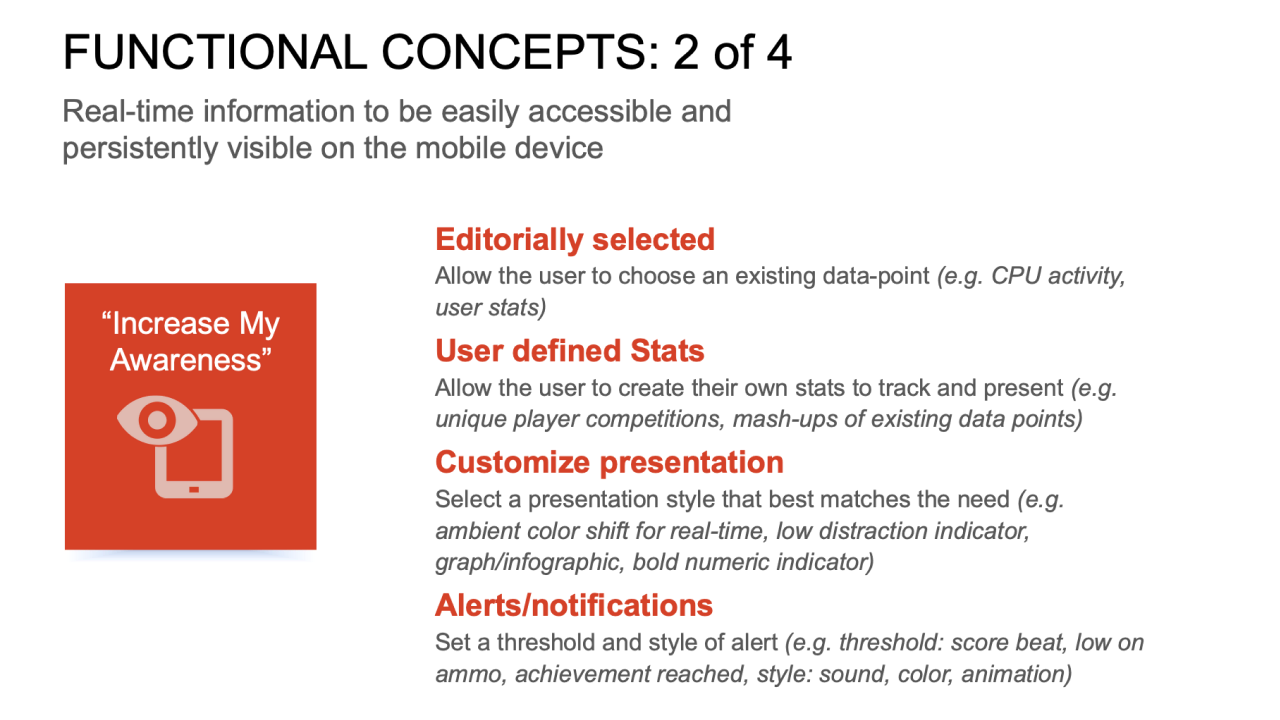
I facilitated workshops with representatives from Logitech and the game developer community, resulting in a set of experience concepts that rose to the top of the discussion.
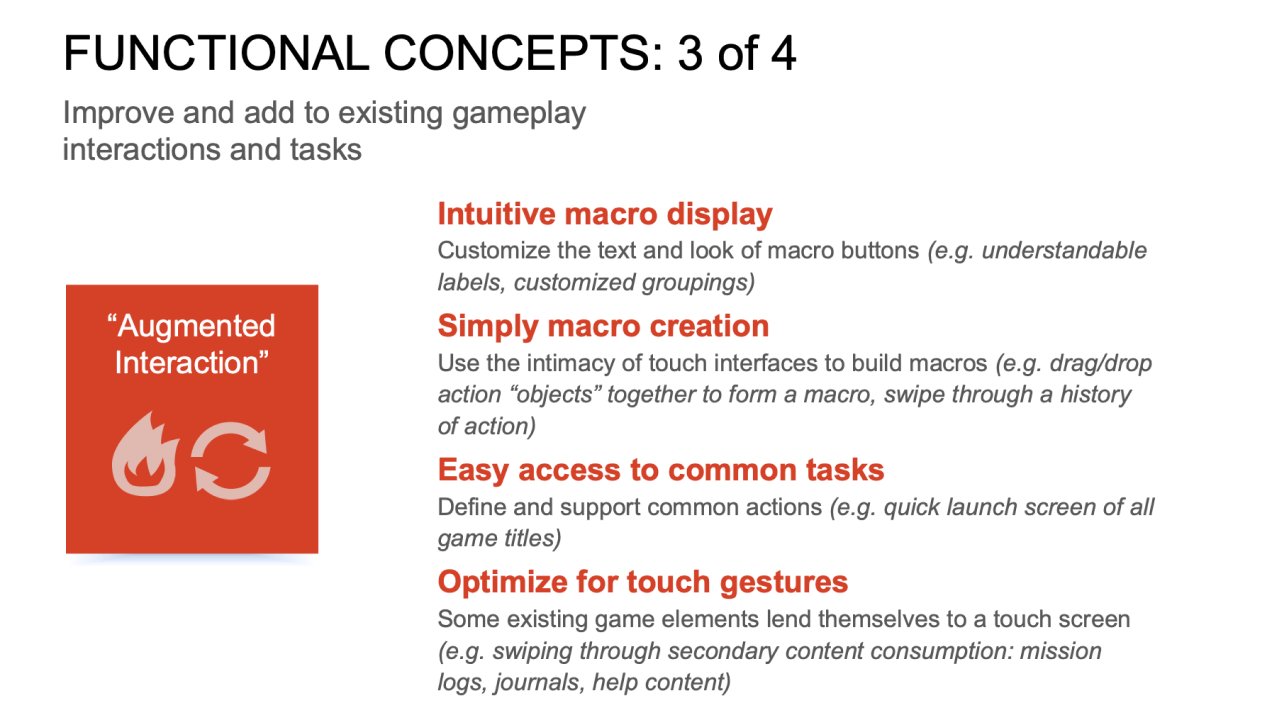
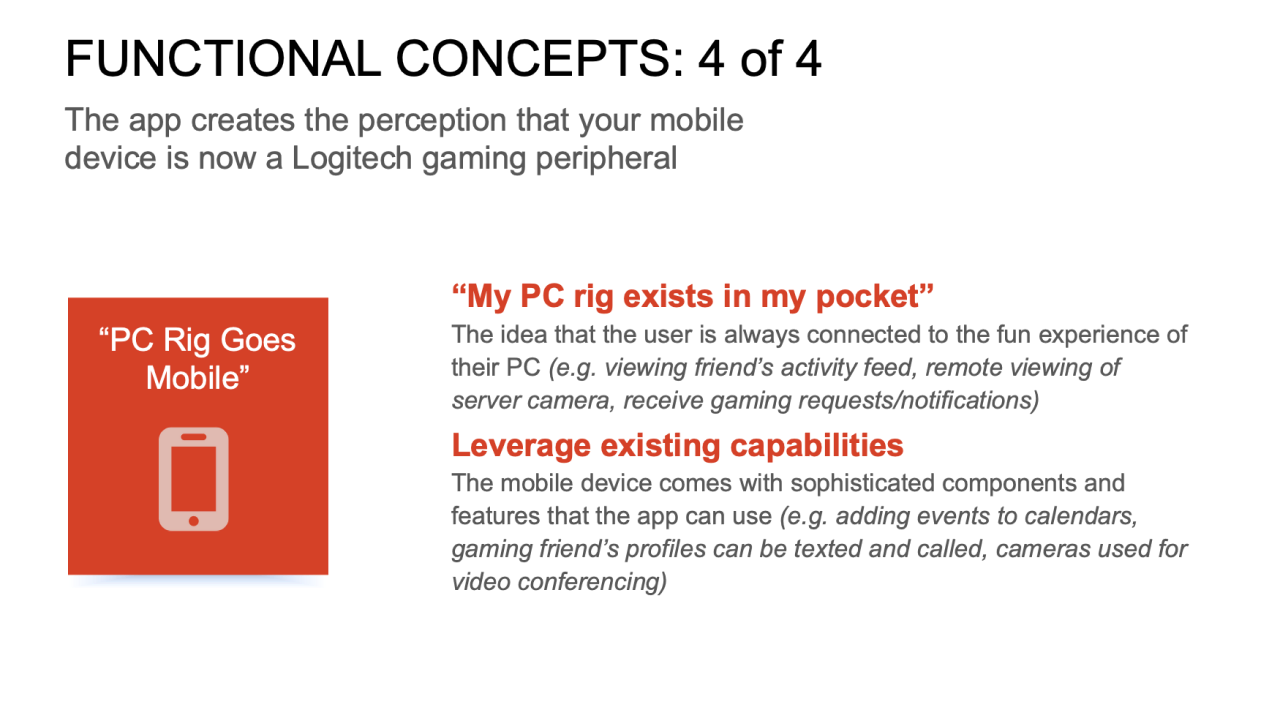
Concept Design
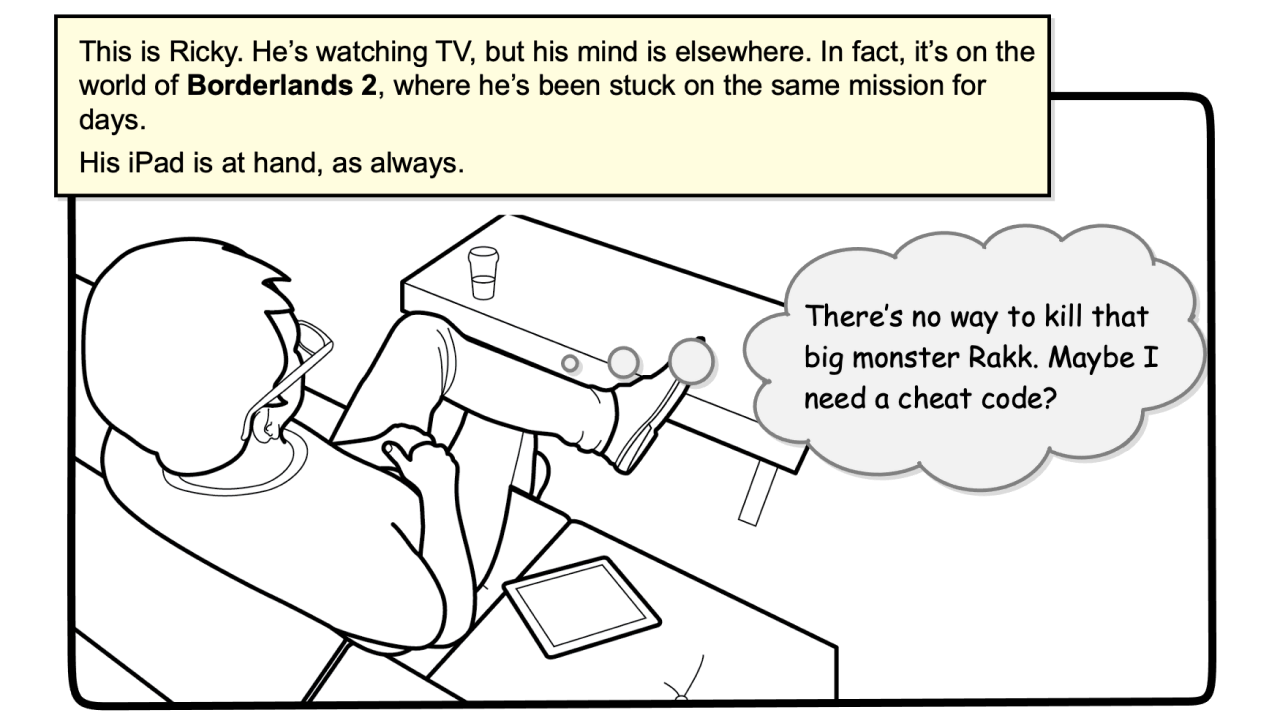
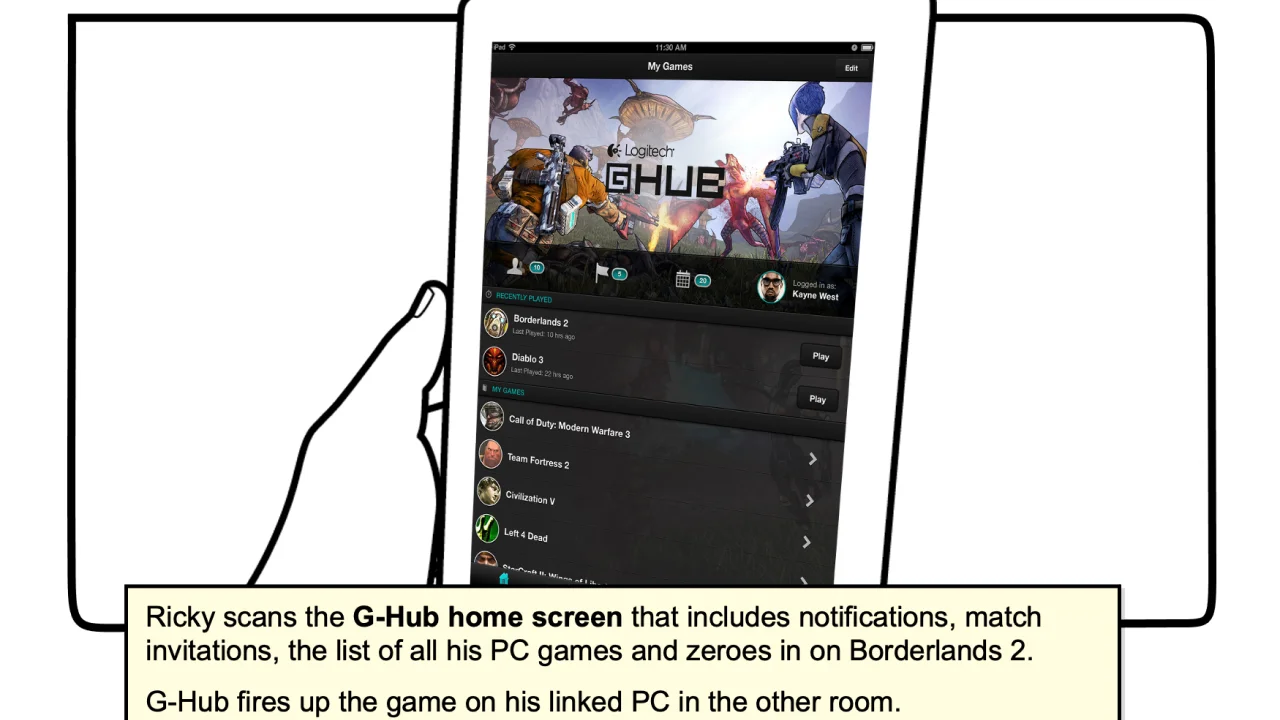
Illustrated Story
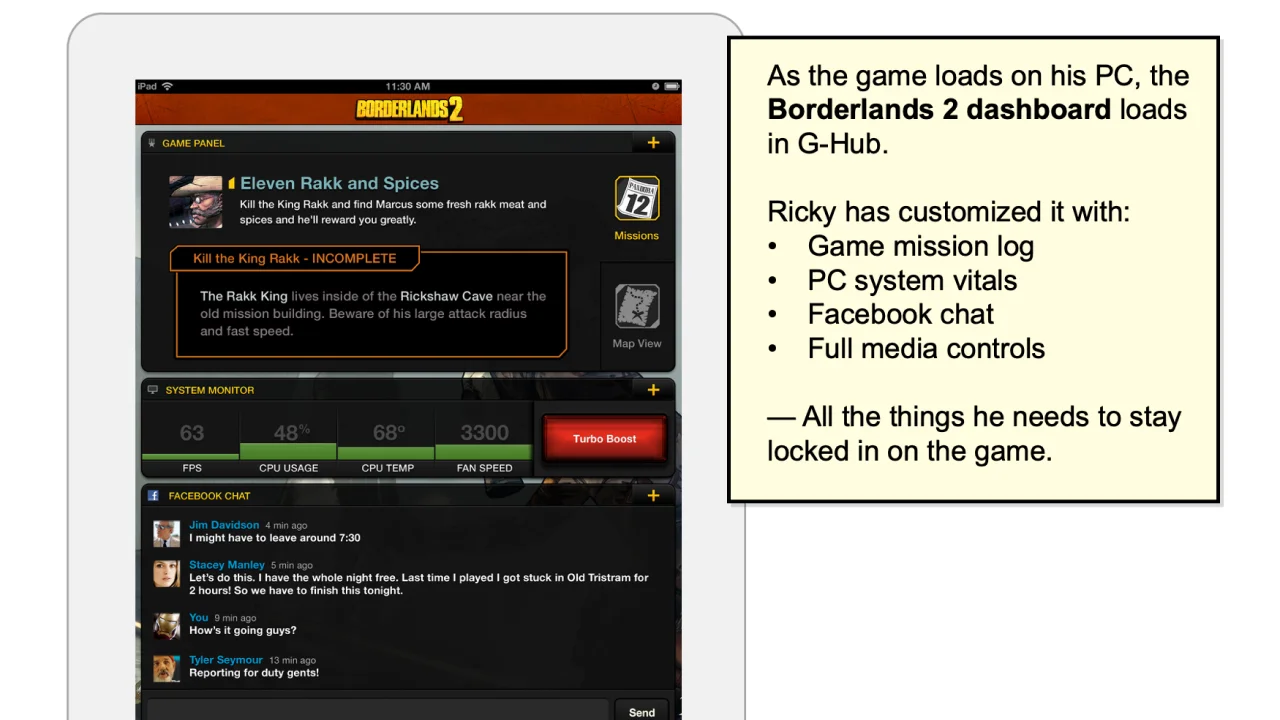
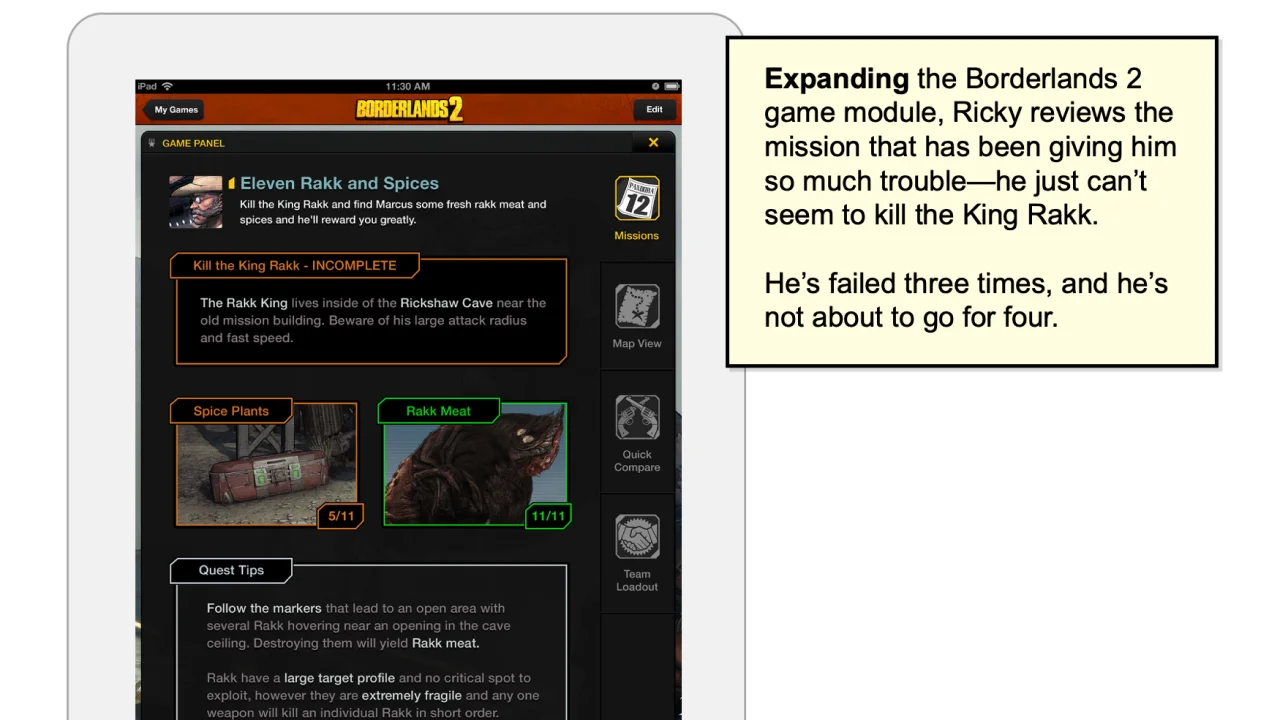
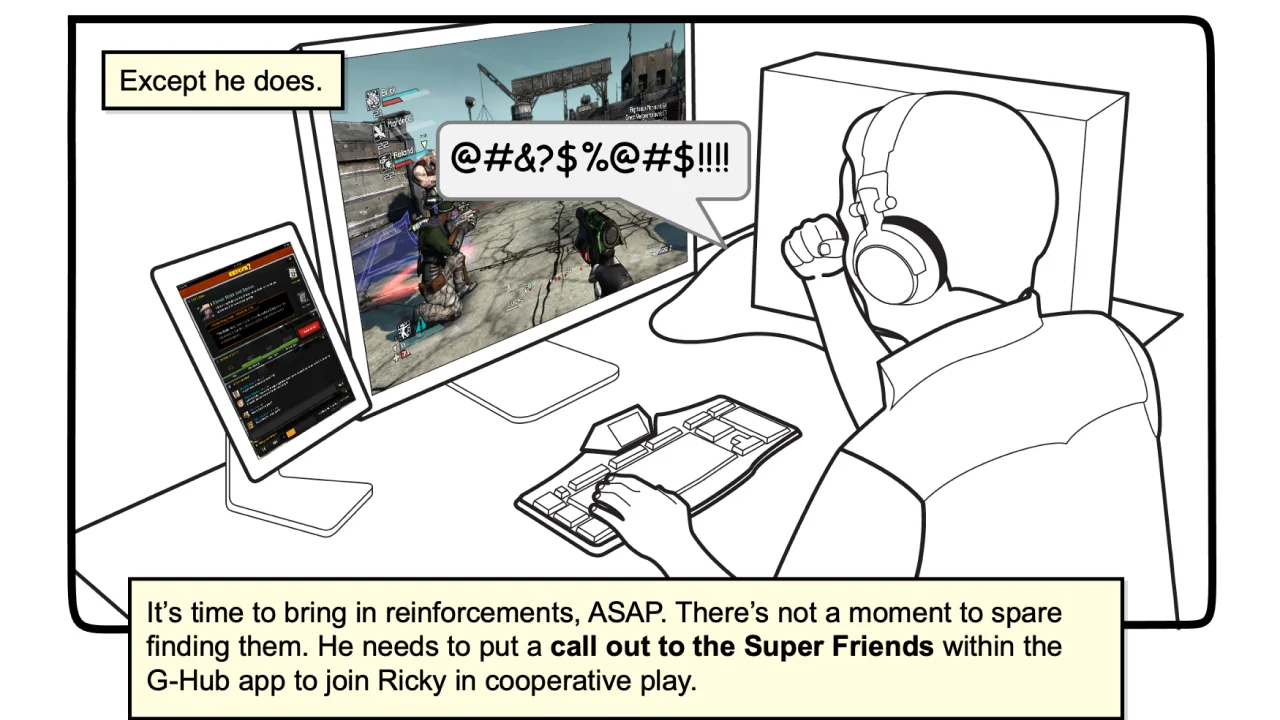
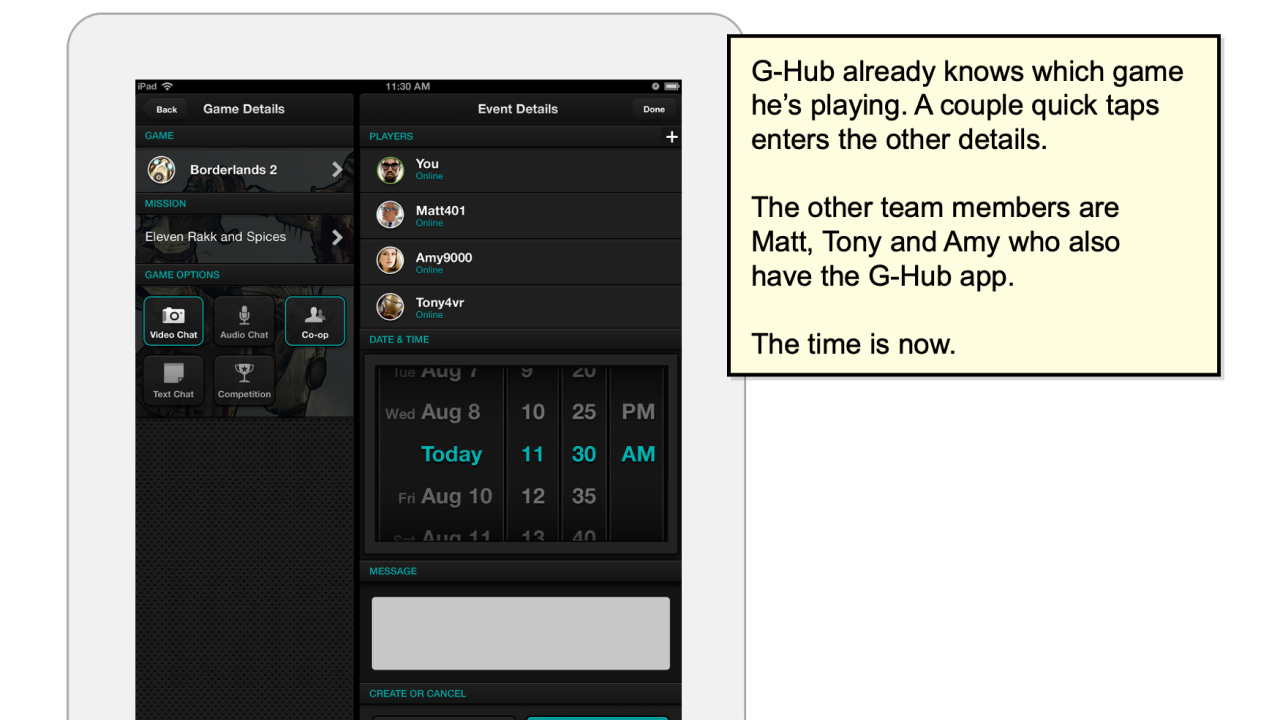
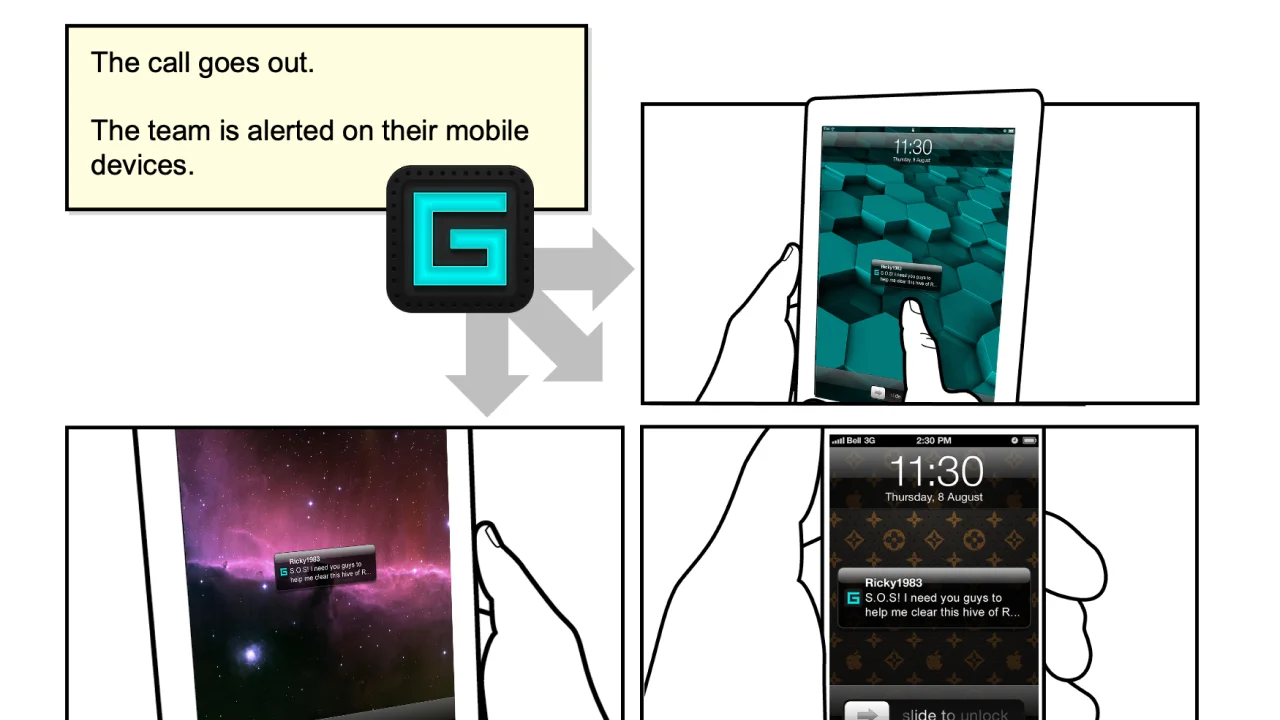
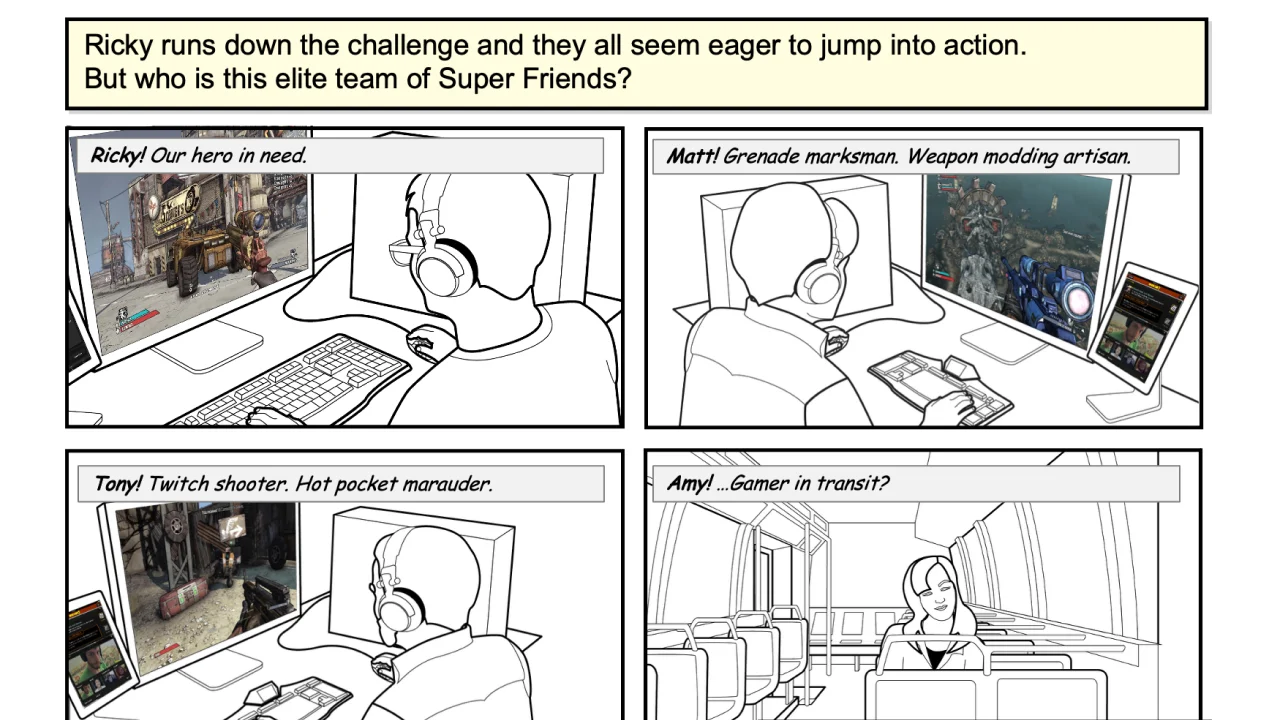
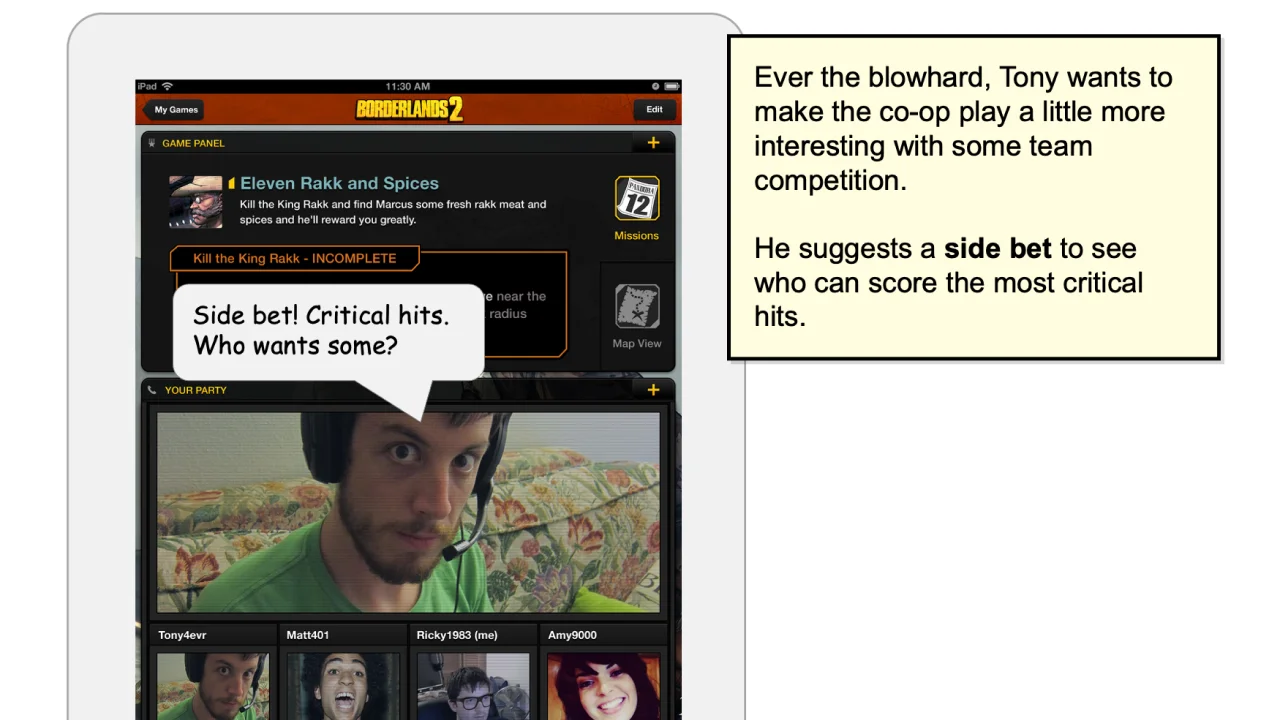
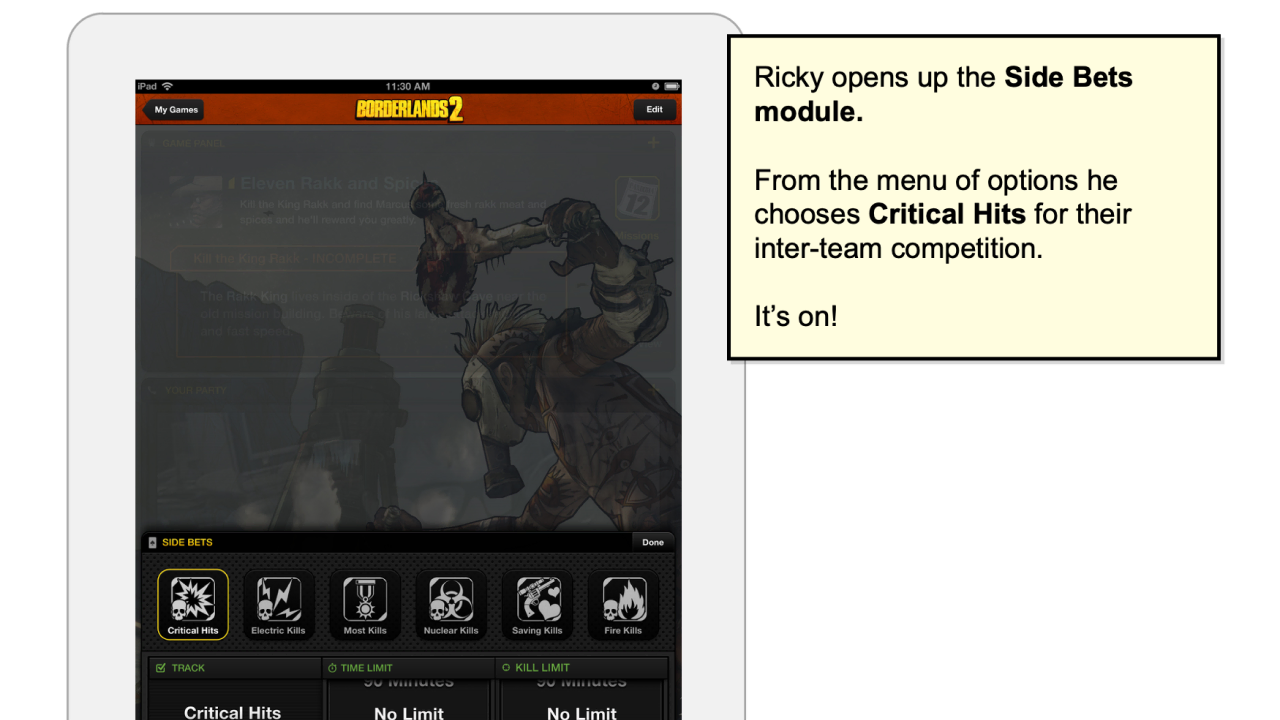
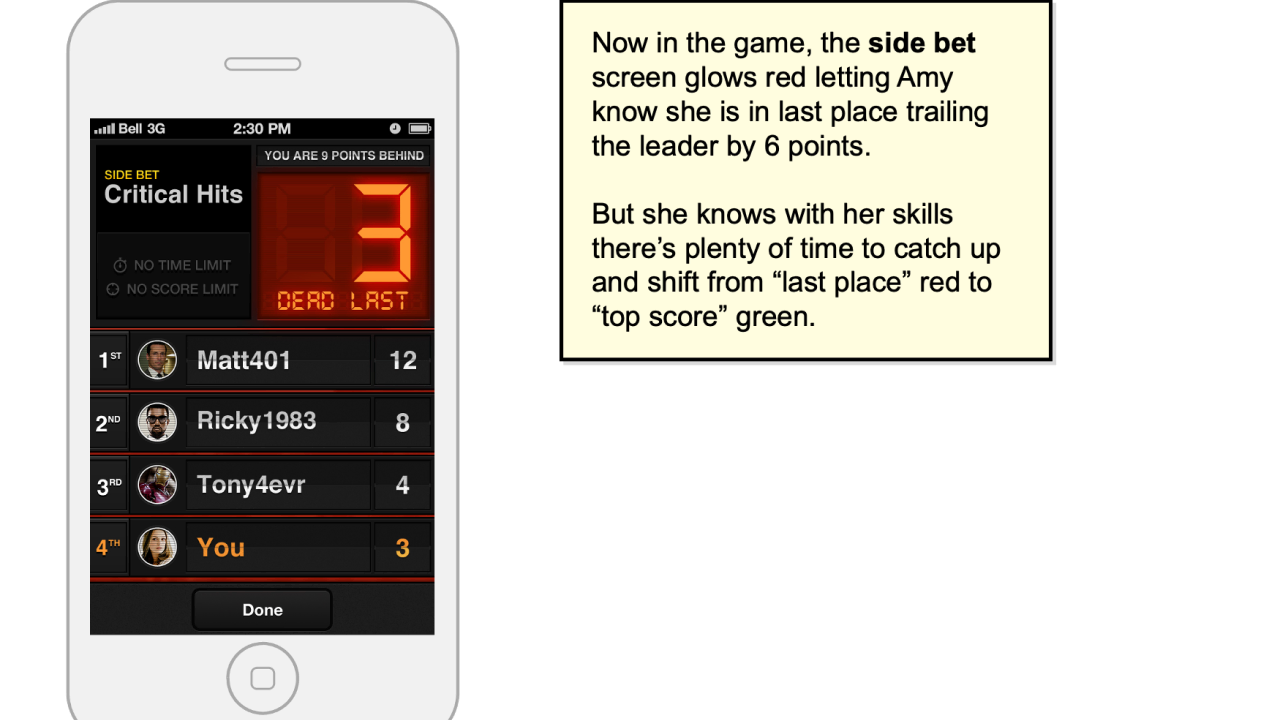
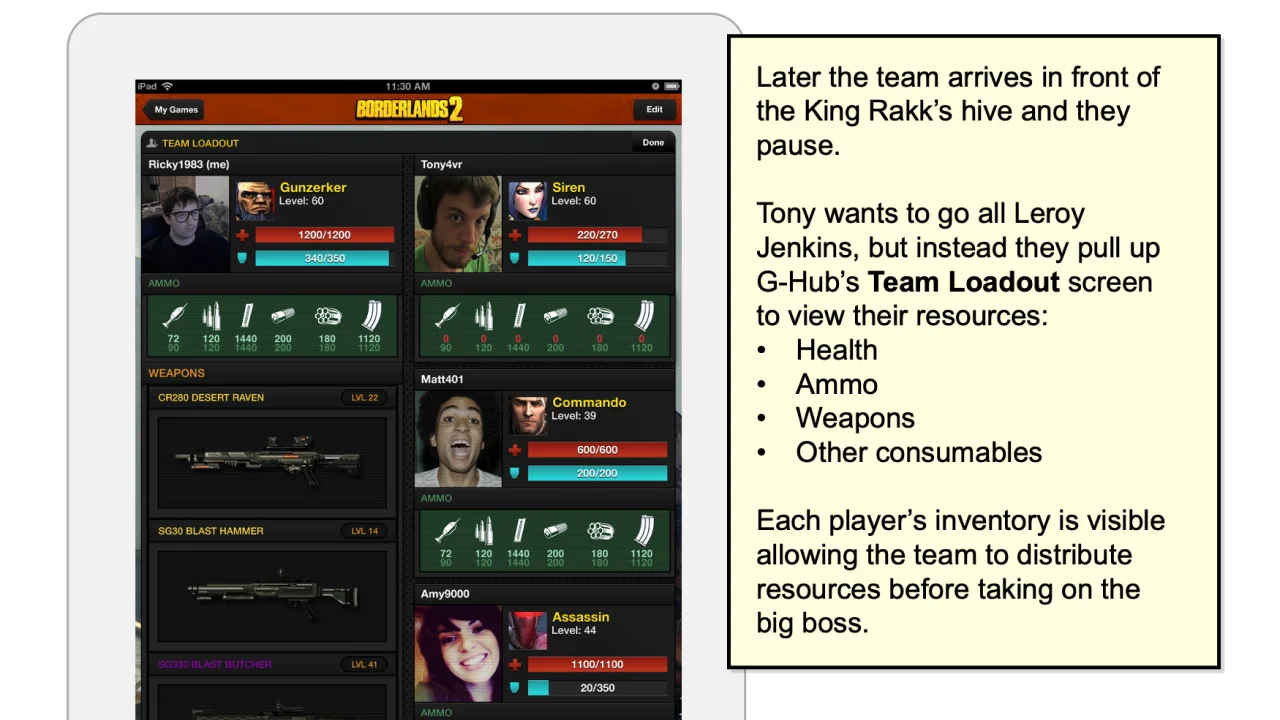
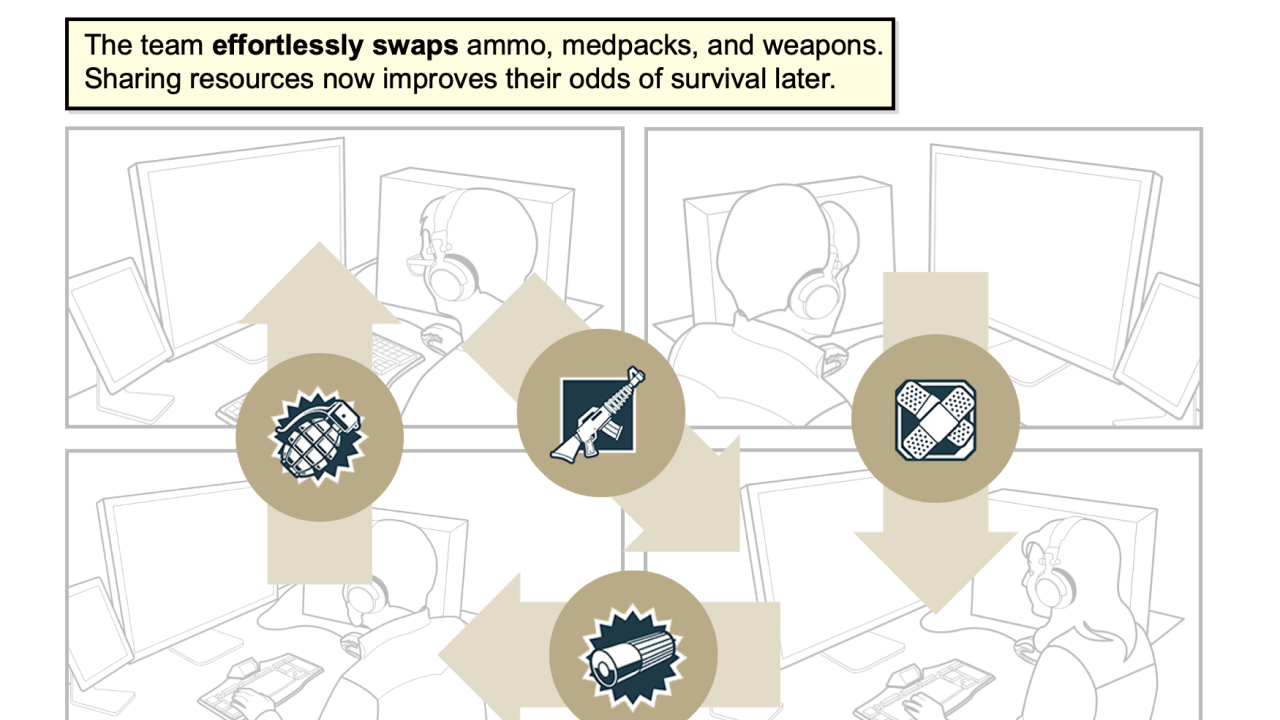
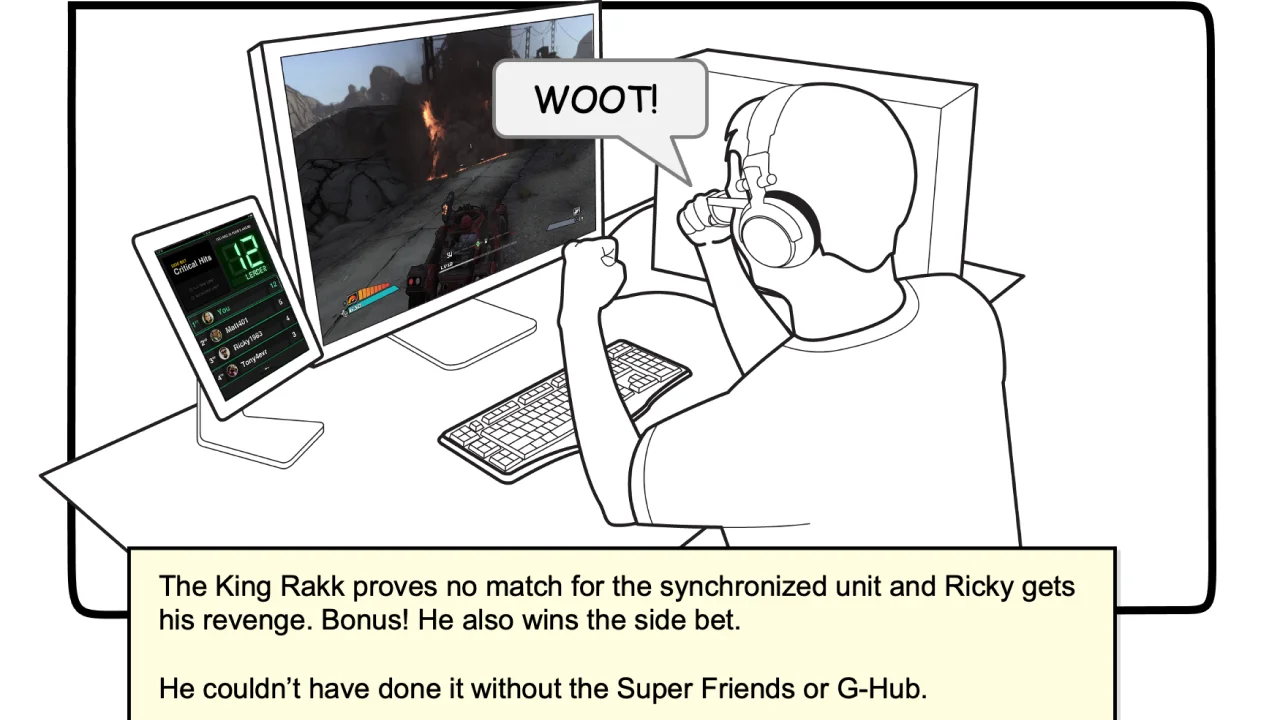
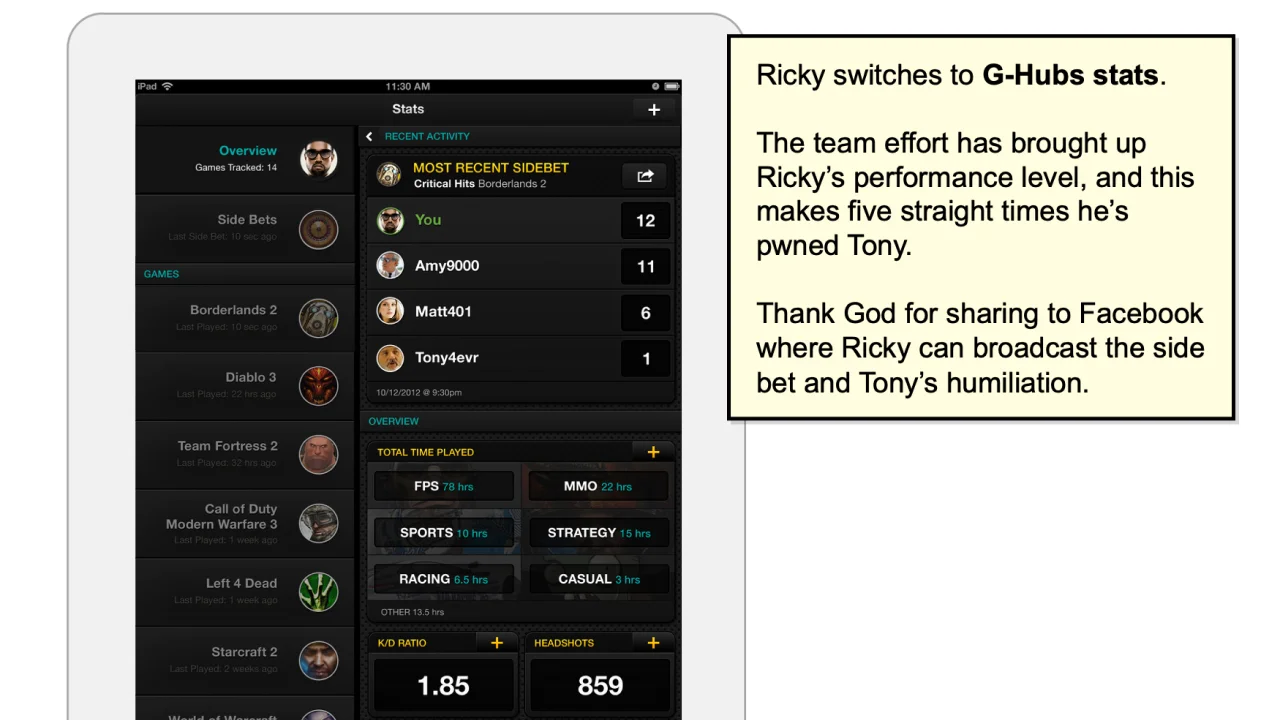
To bring the UX/UI concept to life, we embedded it within a comic book-style narrative that allowed interactions between the game and the proposed technology to shine through, along with the dynamics between a group of dedicated gamers.
Promo Video
To generate excitement internally at Logitech and potential partners, I led design for this promo video.
Impact and Reflection
Foundation for Logitech G Hub
Logitech G Hub launched in 2018. This first generation focused on organizing peripheral settings and macros tailored to specific game titles.
Shift toward software-enriched experience
A core Logitech G strategy is bridging the experience gap between Logitech hardware and the digital gaming experience. This work represented an early step in that direction.