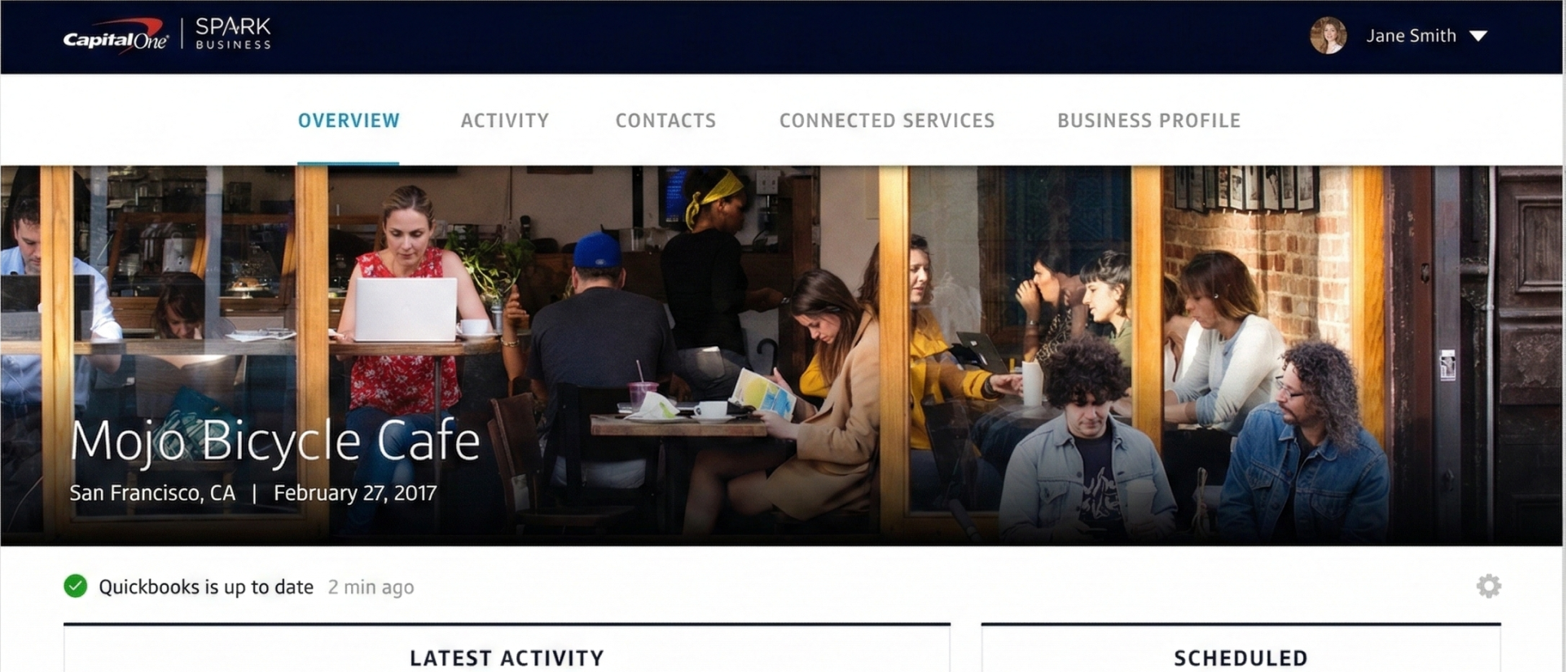
Executive Summary
Research-Led Experience Strategy for SMB Growth
Company
Capital One
Timeline
3 months
Project
Research, IA, & CX
My Role
Creative Lead
Capital One engaged us to strengthen Spark’s position in the small and medium business (SMB) market.
The project had three interconnected objectives:
- Deeply understand the Spark SMB customer
- Inform how Spark should be marketed on the public website
- Define how the signed-in experience should reflect the financial mental model of small business owners
The client specifically requested multiple strategic directions for both the marketing information architecture and the signed-in visual experience to support internal exploration and decision-making.
This case study is organized into three sections:
- Research and Insights
- Marketing Website Concepts
- Signed-In Spark Dashboard Concept
Detailed Case Study
Research
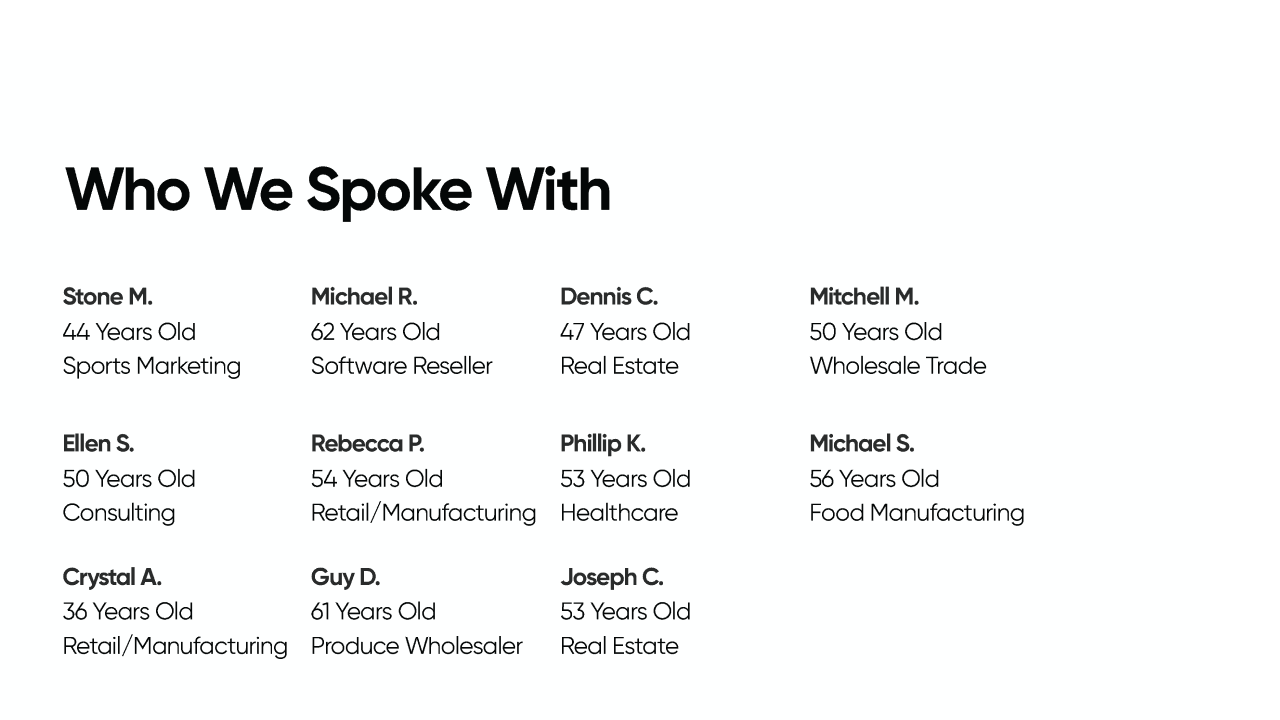
In-Depth Interviews (11 Participants)
Conducted in-depth interviews with 11 small and medium business owners across industries observing how they:
- Track revenue and expenses
- Manage short-term cash flow
- Make decisions about financial tools
Behavioral Exercises
To uncover mental models beyond verbal responses, we incorporated:
- Card sorting exercises to understand categorization logic
- Stack ranking to identify priority needs and decision drivers
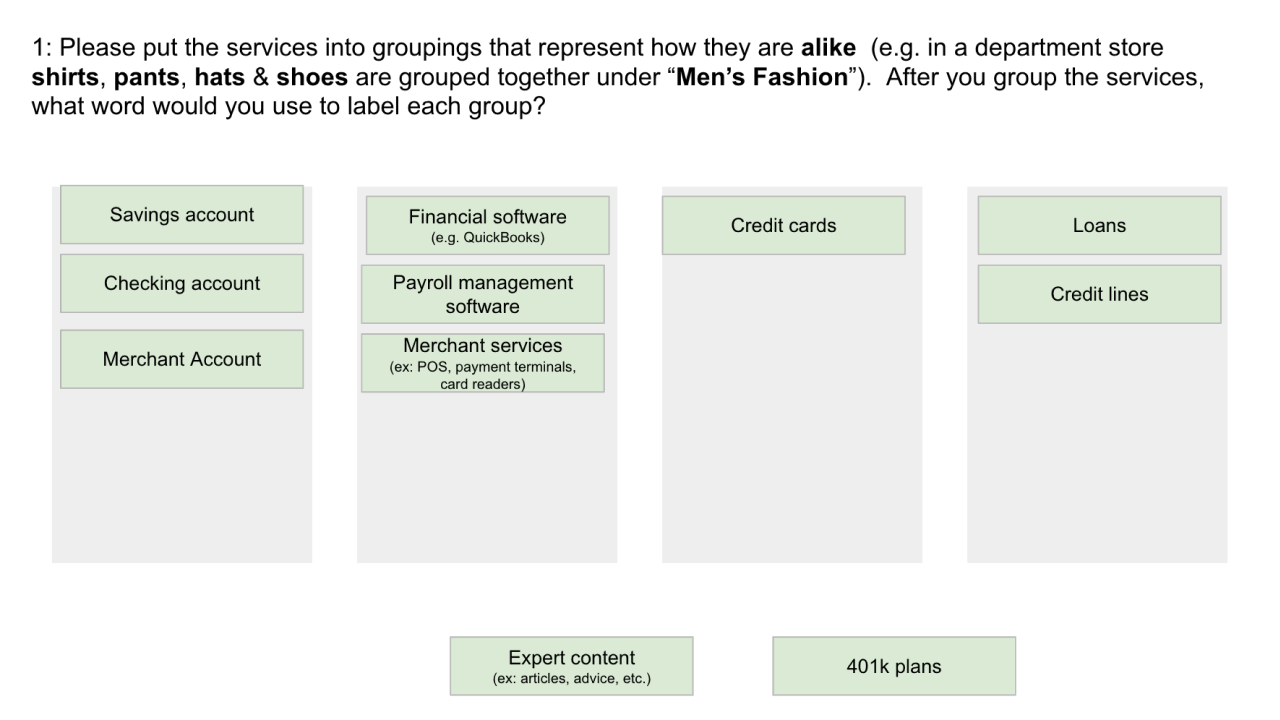
Card Sorting
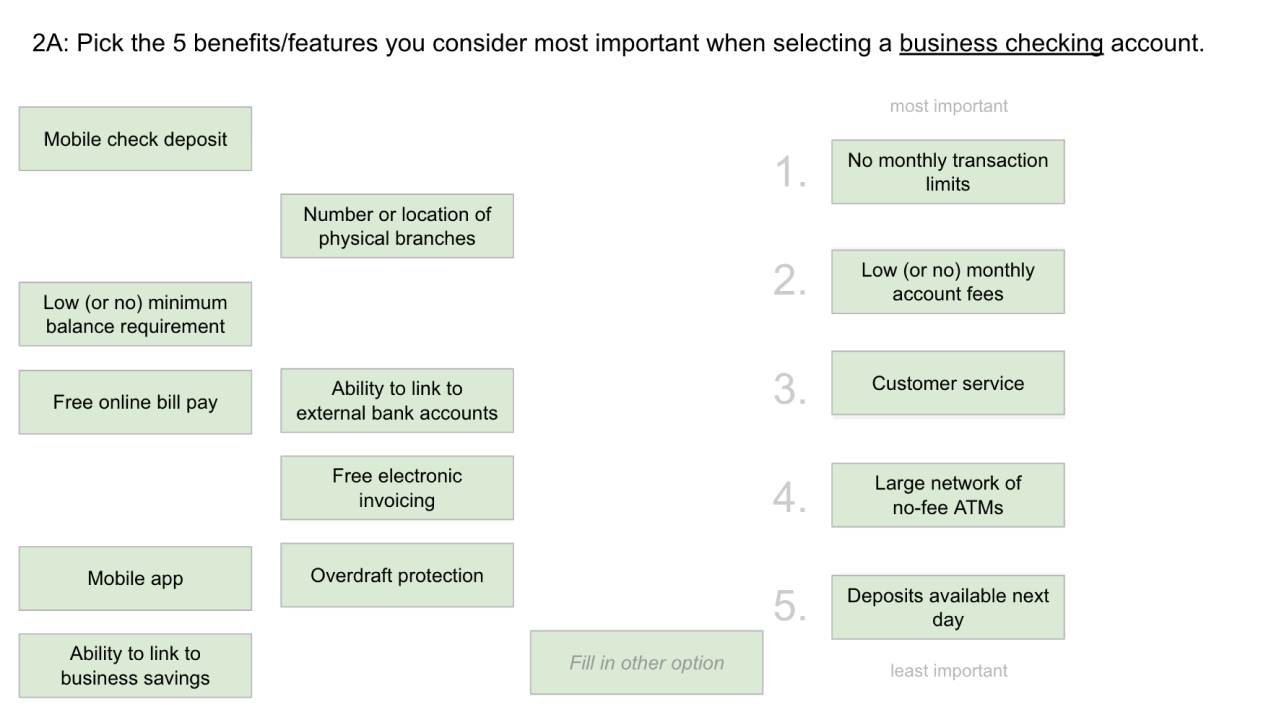
Stack Ranking
Insights
Target Audience Definition
Research clarified the specific small business segment Spark was best positioned to pursue. The most aligned audience consistently shared three primary characteristics:
- Digital Savvy — Conducts the majority of banking online, yet still values access to a real person to quickly resolve complex issues or build a trusted relationship.
- Small and Growing Businesses — Typically less than 10 years old and actively expanding. More mature, established companies showed less likelihood of increasing financial complexity or switching providers.
- Under $2 Million in Annual Revenue — Businesses above this threshold were significantly less likely to change banks or shop for new financial products. Companies under $2M demonstrated greater openness to new accounts and money-saving opportunities.
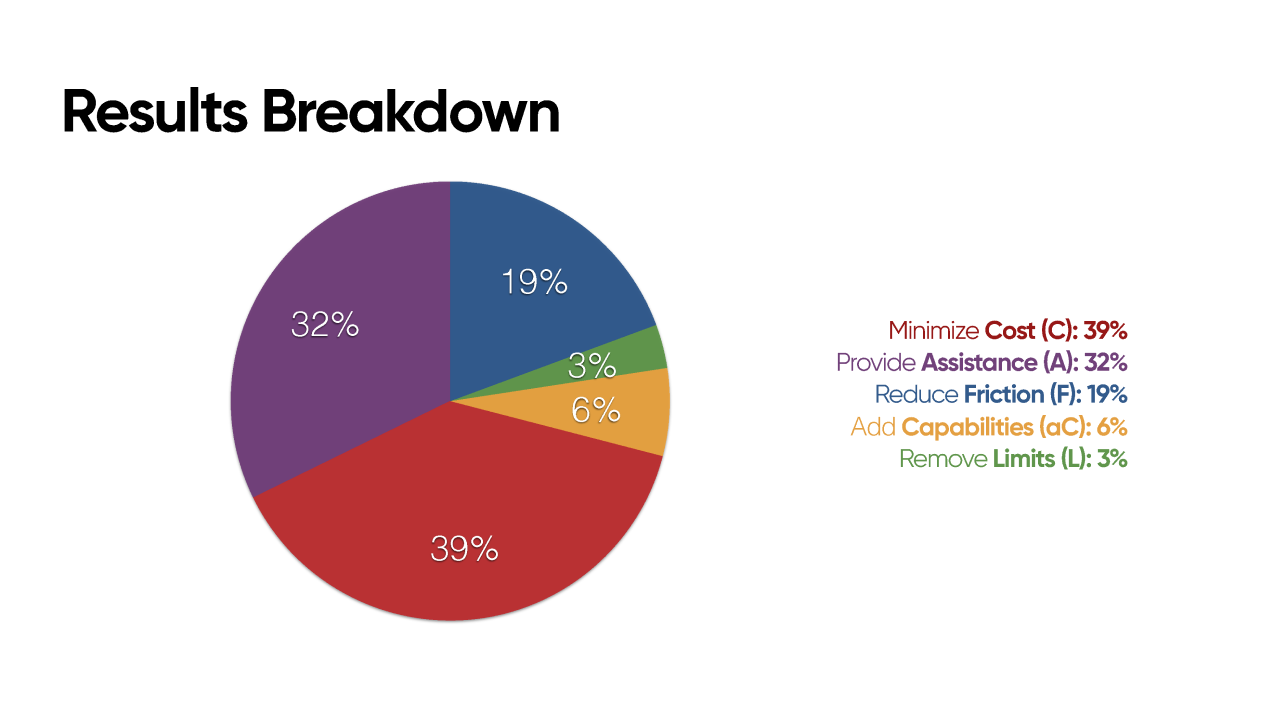
What SMB Owners Want Most From Their Bank
The most highly prioritized features SMBs want is keeping costs low and getting help when needed.
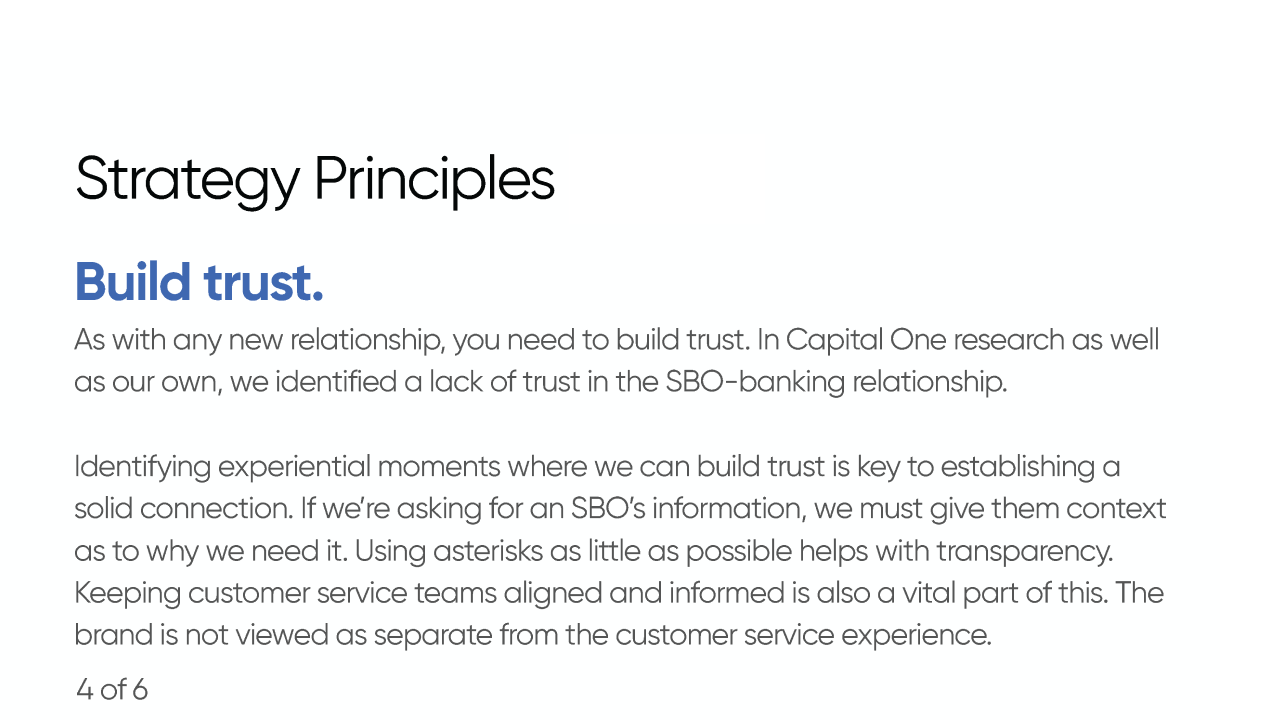
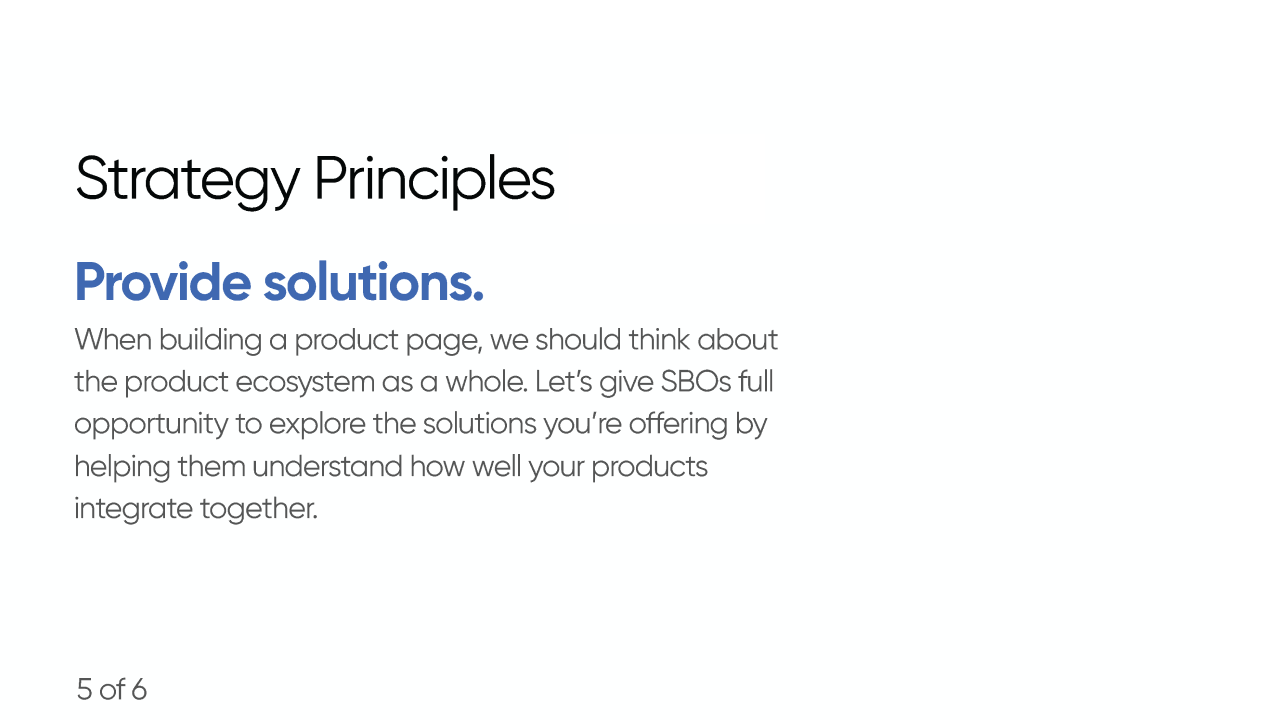
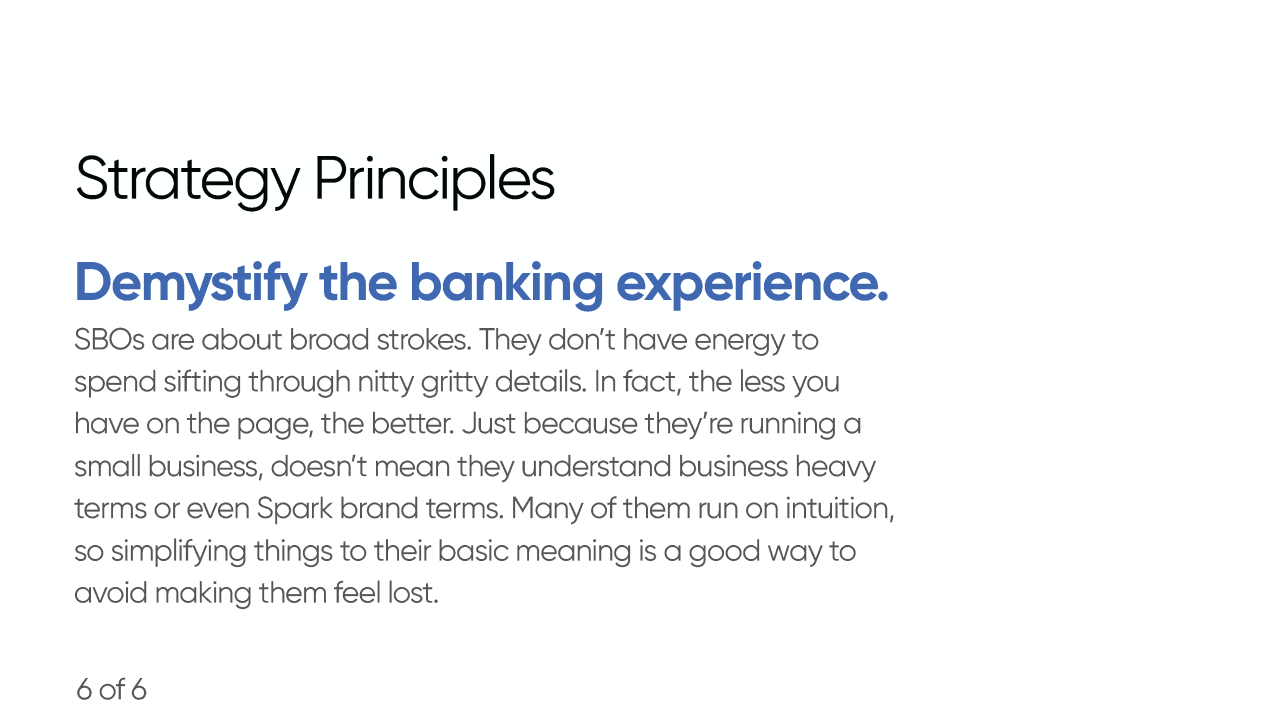
Six Strategy Principles
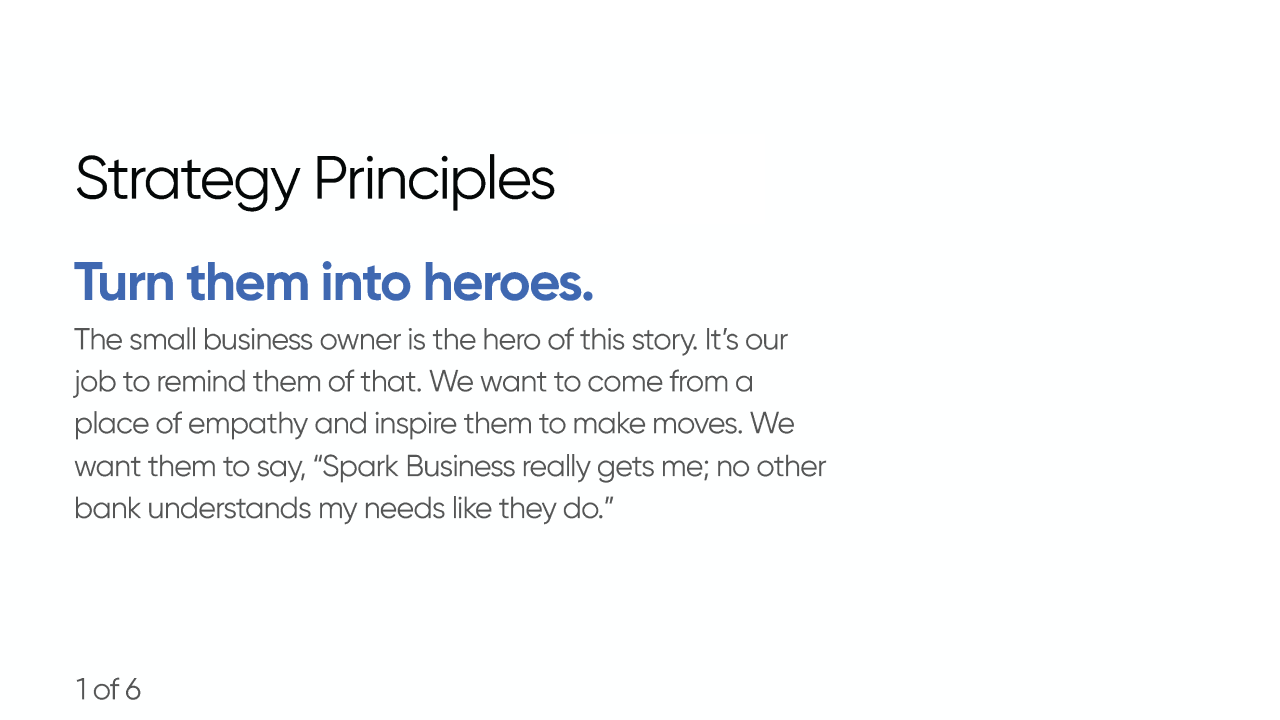
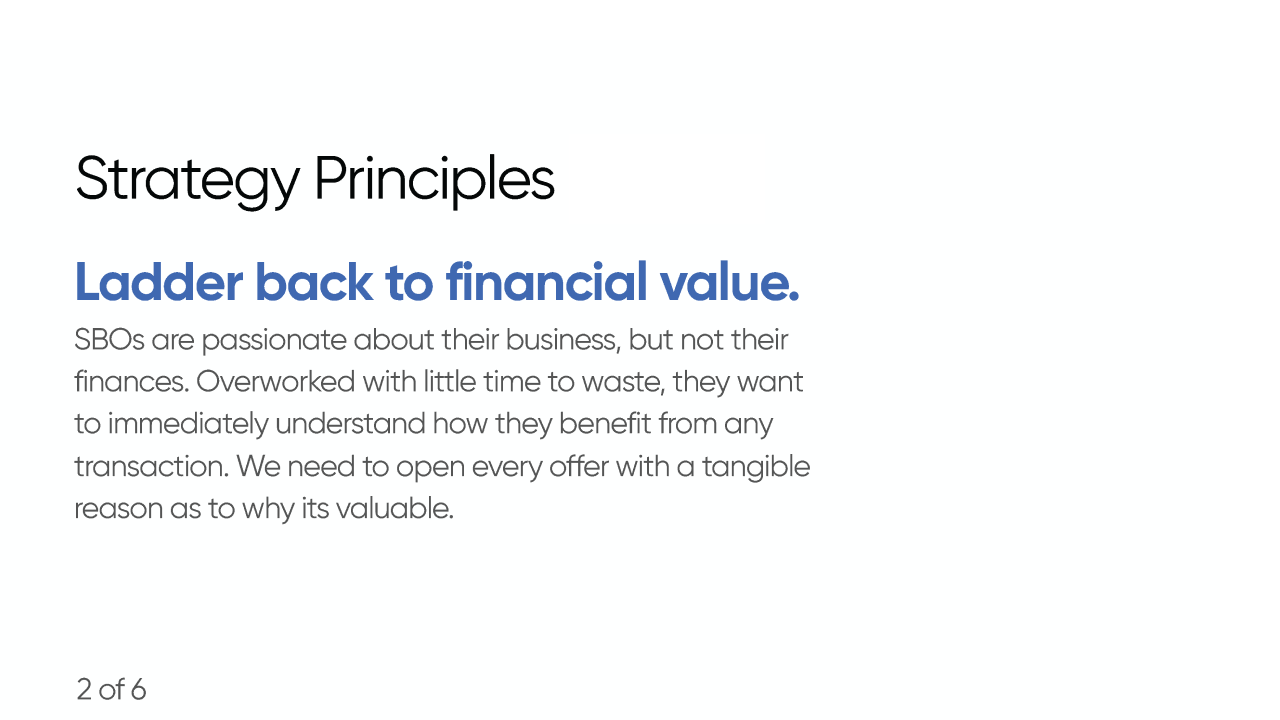
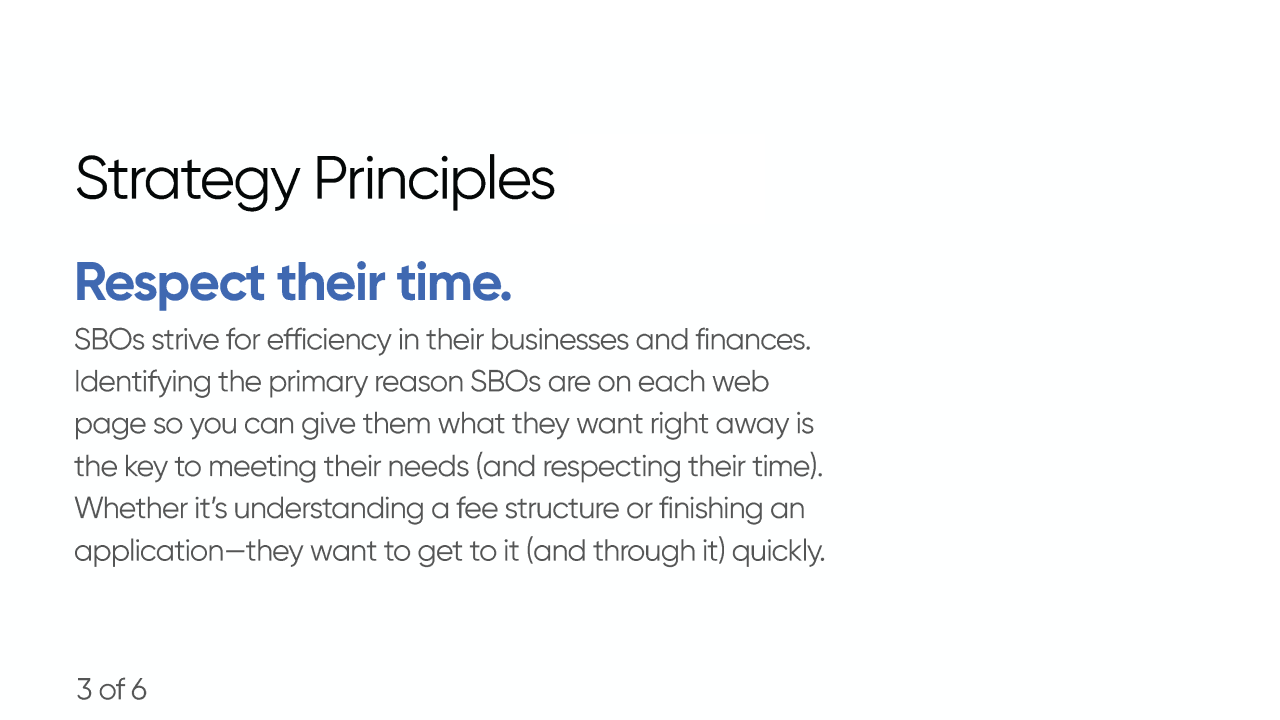
The research informed six guiding principles that shaped both the marketing site and signed-in experience.
Marketing Website Concepts
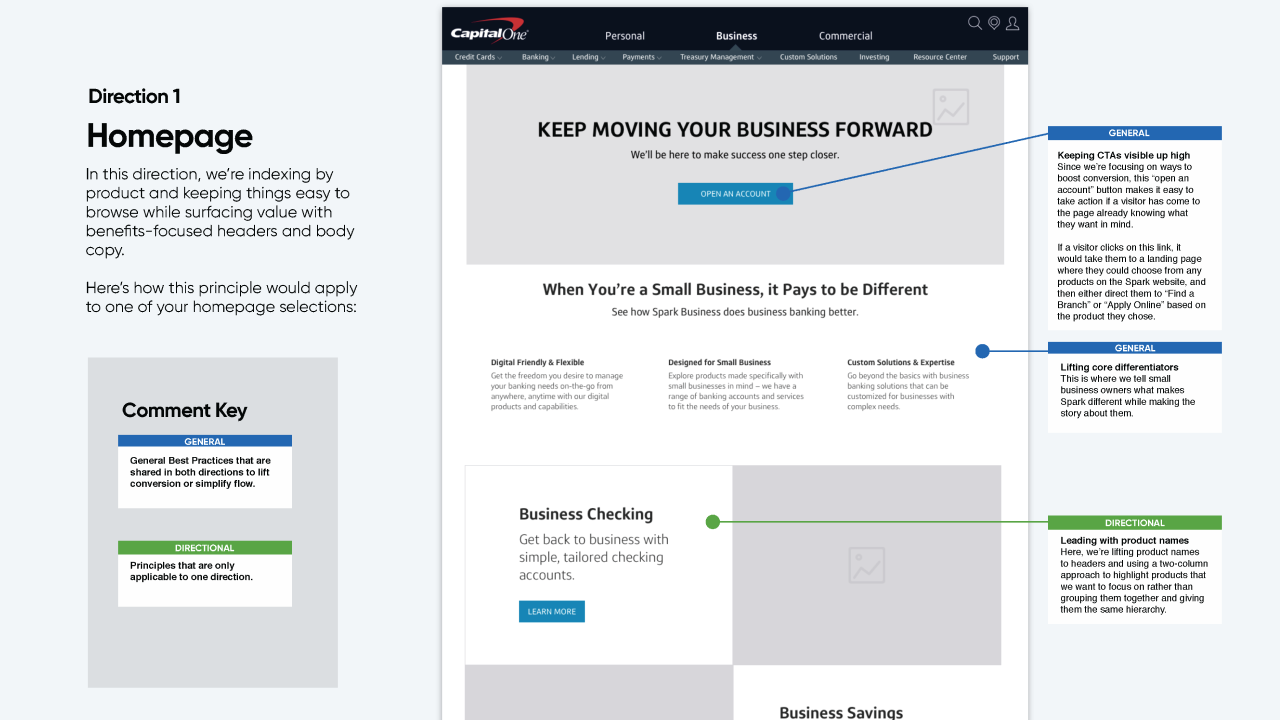
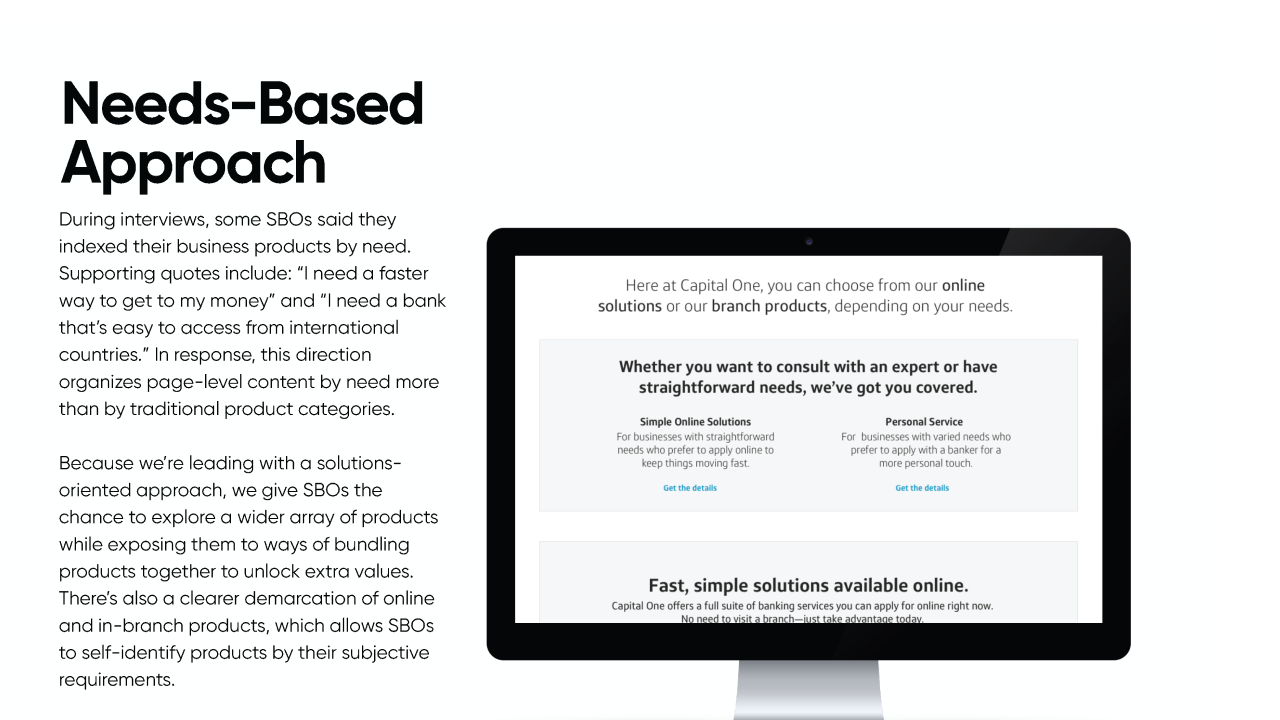
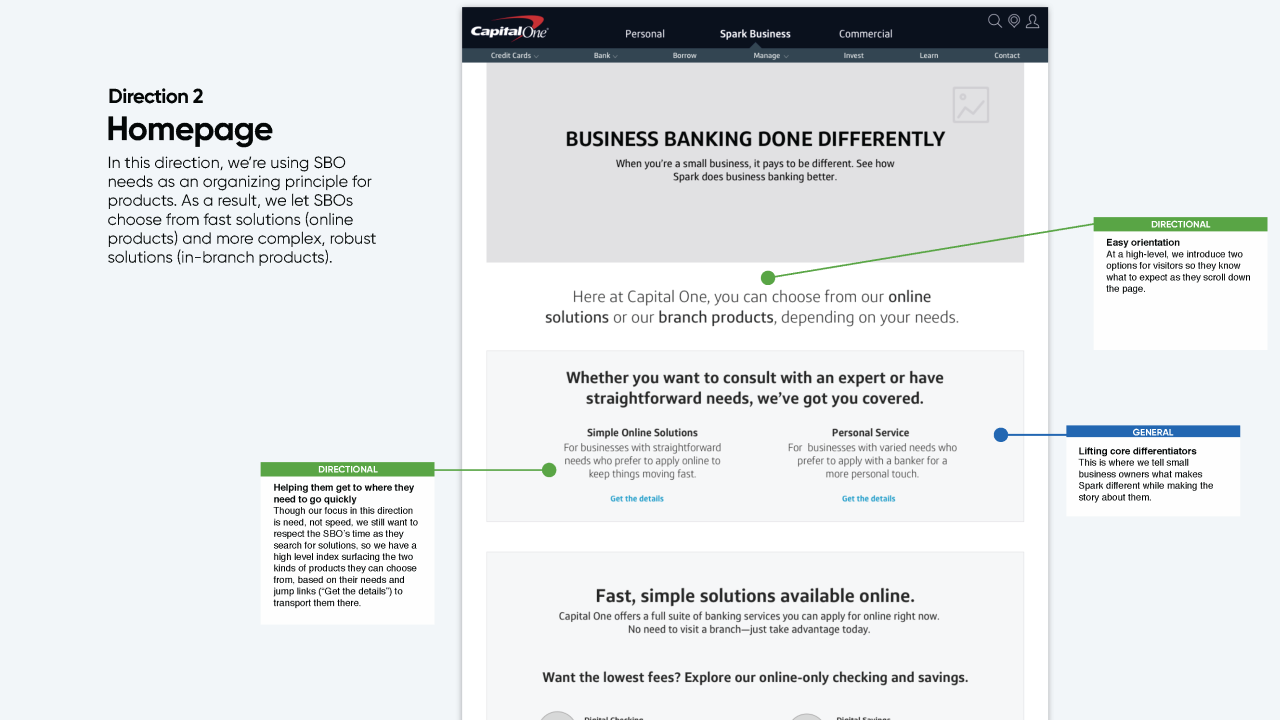
Research revealed a split in how small business owners think:
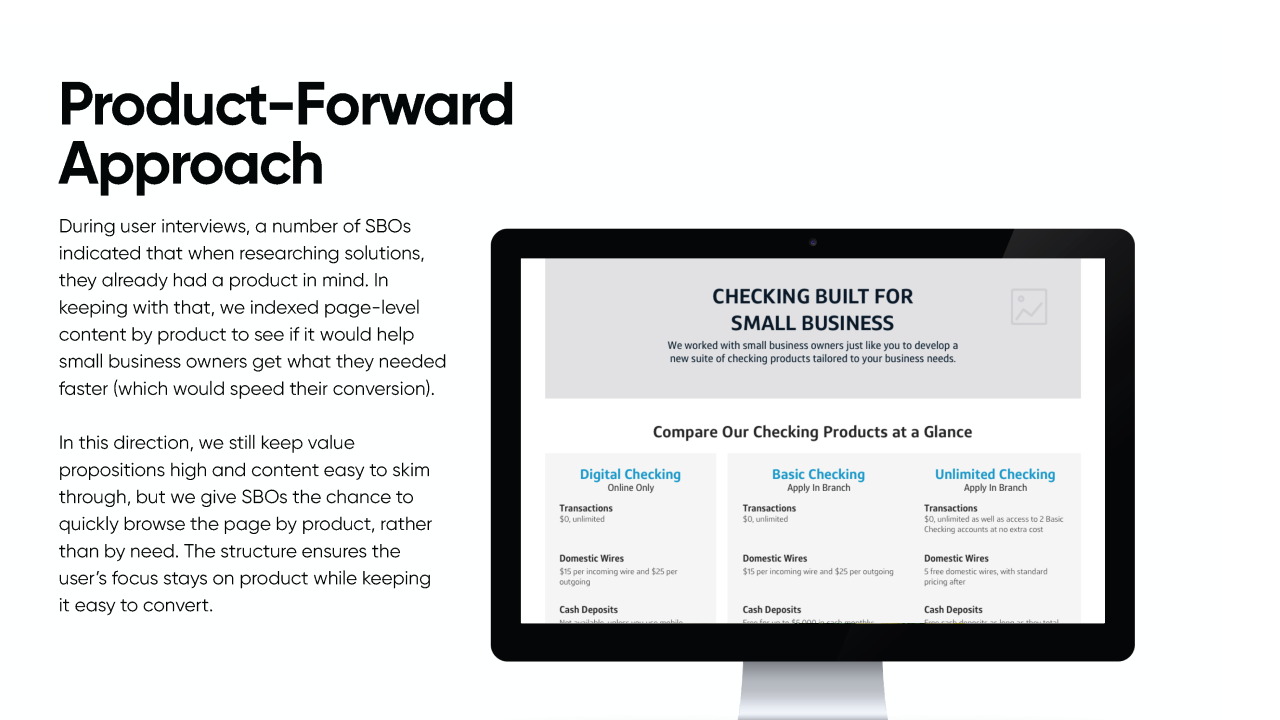
- Some approach banking in terms of products (credit card, checking, etc.).
- Others think primarily in terms of needs (manage cash flow, control expenses, grow revenue).
To reflect this divide, we developed multiple information architecture directions:
Direction 1 — Product-Led
Direction 2 — Needs-Led
Signed-In Spark Dashboard Concept
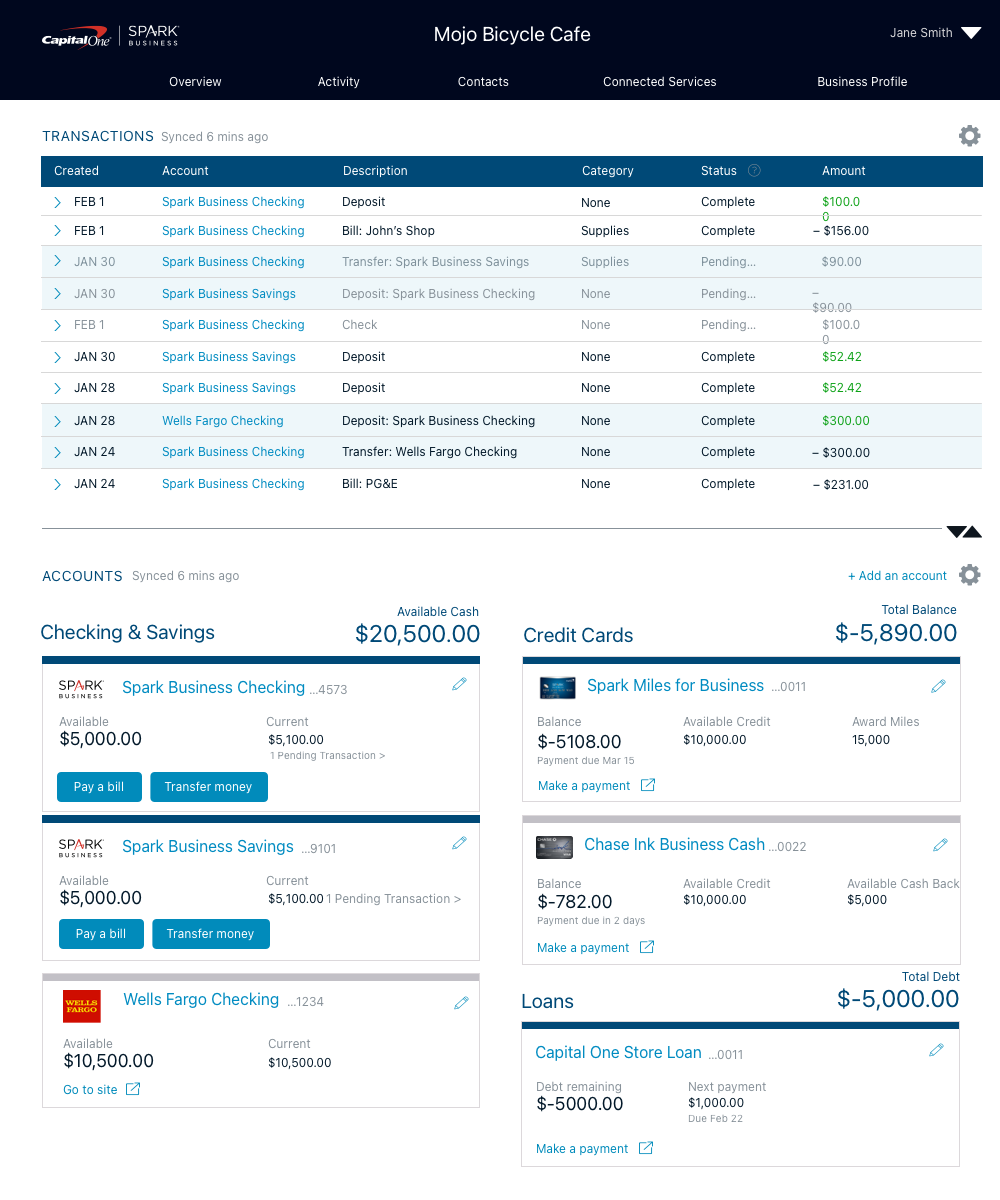
Research clearly showed that SMB owners operate with a near-term financial mental model.
They think in terms of immediate status and upcoming obligations—not abstract financial summaries.
The signed-in dashboard concept was designed around three core questions:
- How much cash do I have available right now?
- What are the most recent transactions I need to be aware of?
- What is the next bill I need to pay?
Rather than emphasizing product accounts as primary navigation, the dashboard surfaced actionable financial clarity first.
The visual hierarchy reinforced immediacy and awareness, helping business owners quickly assess their position and make decisions with confidence.
Impact & Outcomes
This work provided:
- A validated understanding of the Spark SMB audience
- Clear strategic directions for marketing positioning
- A signed-in dashboard aligned to real financial mental models
- Executive-ready concepts to guide internal decision-making
By grounding both acquisition and product experience in research, Spark moved from assumption-driven design to behavior-informed strategy.